Your Toronto Zoo Celebrates Reverse the Red Day!
|
|
|
TORONTO, ON, February 5, 2026 - This coming Saturday, February 7th, 2026 is Reverse the Red Day and your Toronto Zoo is joining the international celebration of efforts to address biodiversity loss and sharing our contributions to conserving Canadian species!
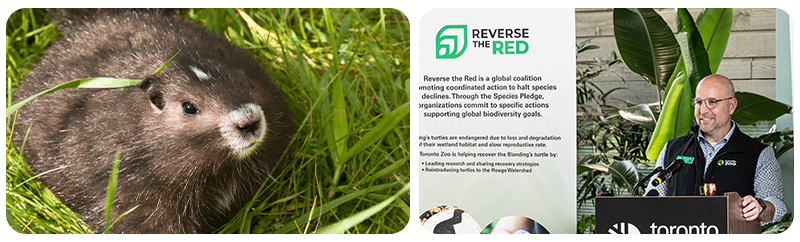
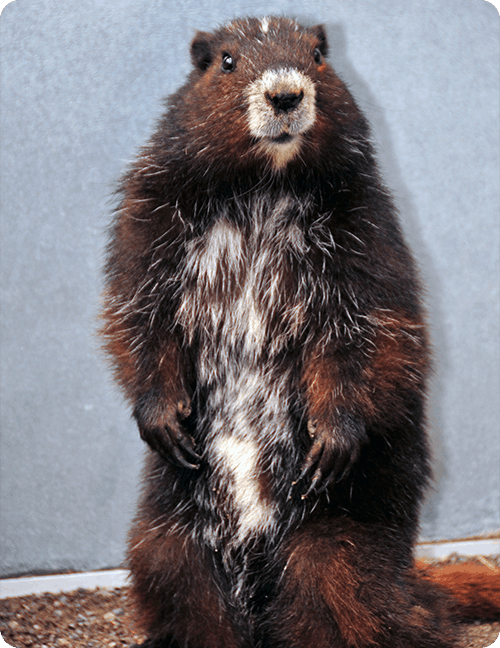
This year, for Reverse the Red Day, in collaboration with our partners at the Marmot Recovery Foundation, Wilder Institute, and Nuclear Waste Management Organization, we are proud to announce that we are making an official Species Pledge to Reverse the Red for the critically endangered Vancouver Island marmot.
Many of the species we’re supporting, including the Vancouver Island marmot, are currently hibernating their way through the cold Canadian winter, but our conservation efforts never sleep! We are inviting Zoo guests on Saturday, February 7th to join us for a Hibernation Party to learn more about our work to save the marmot, and other Canadian species at risk. Guests can stop by the Special Events Centre for some free hot chocolate, crafting, learnings about these species, and the importance of Reversing the Red on the IUCN’s Red List.
The “Red” in the Reverse the Red refers to the Red List of Threatened Species™, a global publication by the International Union for Conservation of Nature (IUCN) which monitors the conservation status of wildlife species. While most conservation stories focus on decline, Reverse the Red focuses on positive action, inspiring a diverse coalition of partners to collaborate, scale up aspirations and impact, and engage people from all walks of life to improve the status of imperilled species globally.
“At your Toronto Zoo, we are proud to be Guardians of Wild, working with partners from around the world in species recovery efforts” says Dolf DeJong, CEO, Toronto Zoo. From reintroducing species through breeding programs, to educating our 1.3 million guests per year about conservation efforts, we’re envisioning and working towards a world where people, wildlife, and wild spaces thrive.”
|
|
|
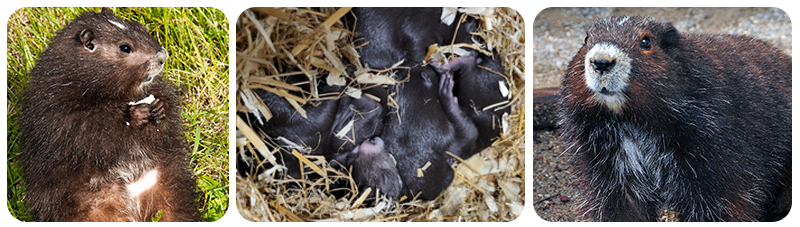
Working with the Marmot Recovery Foundation and the Wilder Institute, your Toronto Zoo has helped Vancouver Island marmot populations grow from fewer than 30 individuals in 2003 to approximately 427 in 2025. Thirty-seven active marmot colonies now inhabit numerous mountains across Vancouver Island. The overall program goal is getting the wild population to a point where the most intensive actions - such as supplemental feeding and conservation breeding - are not needed. However, the population is not yet at the point where recovery actions could be stopped without the species backsliding. This pledge signifies our ongoing commitment to the recovery of the Vancouver Island marmot - we have made great strides in their conservation, but the work is not yet over.
Working alongside our partners at the Toronto Zoo and the Marmot Recovery Foundation, we’ve seen incredible progress in the recovery of the Vancouver Island marmot—but there is still more to do,” said Dr. Brenna Stanford, Conservation Program Manager at the Wilder Institute. “This Species Pledge reaffirms our shared commitment to collaboration and action, and to creating a secure future for the species as we continue to strengthen recovery efforts.”
|
|
|
|
|
Adam Taylor from the Marmot Recovery Foundation added “This Reverse the Red Day, the Marmot Recovery Foundation is proud to join our partners in committing to an Official Species Pledge for the Vancouver Island Marmot. Saving this only-in-Canada species from the brink of extinction has been the work of an incredible team over many years, but we know that the job is not done yet. Recovering the Vancouver Island marmot will take more on-the-ground work, more science, and more marmots! This is not just about the marmot. It is about showing Canada that together, we can save even the most endangered species.”
|
|
|
The recovery efforts aren’t only focused on breeding marmots for reintroduction, overall recovery includes:
- Monitoring marmots from the conservation breeding program after their release to the wild
- Facilitating translocations of marmots to increase genetic exchange, bolster small populations, and remove marmots from inappropriate habitats
- Conducting annual surveys of the wild population
- Cryogenically storing living cells for long term genetic preservation in Canada's Wildlife Cryobank at the Toronto Zoo
- Understanding the diet composition and nutritional status of wild marmots
- Supplemental feeding of wild marmot colonies
- Restoring marmot habitat – especially tree removal from alpine meadows
Your Toronto Zoo and the Nuclear Waste Management Organization proudly collaborate with Reverse the Red, and have made Species Pledges for other Canadian species, including Ontario bats and Blanding’s turtles.
“Our ambitious goal to reverse the red is only achieved through commitment to action, such as Toronto's Zoo's pledges for Blanding's Turtles, Ontario bats, and now the Vancouver Island Marmot” says Michael Clifford, Strategy Director, Reverse the Red. “Good strategy, measurable progress, and aligned partners like Marmot Recovery Foundation and the Wilder Institute, are the ways we accelerate recovery and see these species better off tomorrow than today”.
The IUCN Red List of Threatened Species™ is widely recognized as the most comprehensive, scientifically based source of information on the global conservation status of species, and a critical indicator of the health of the world’s biodiversity.
|
|
|
About your Toronto Zoo
Your Toronto Zoo’s mission is to connect people, animals, conservation science and traditional knowledge to fight extinction and our vision is a world where people, wildlife and wild spaces thrive.
An iconic tourist attraction and conservation organization, the Toronto Zoo boasts a number of leading programs for helping wildlife and their natural habitats – from species reintroduction to reproductive research. A world-class educational centre for people of all ages, the Toronto Zoo is open every day and attracts approximately 1.3 million guests each year.
Toronto Zoo is accredited by the Association of Zoos and Aquariums (AZA) and has also achieved the Canadian Council on Animal Care (CCAC) Certificate of Good Animal Practice® and is inspected by the Ontario Ministry of Agriculture, Food and Agribusiness (OMAFA)
About the NWMO
Founded in 2002, the Nuclear Waste Management Organization (NWMO) is a not-for-profit organization tasked with the safe, long-term management of Canada’s intermediate- and high-level radioactive waste, in a manner that protects people and the environment for generations to come.
The NWMO has been guided for more than 20 years by a dedicated team of world-class scientists, engineers and Indigenous Knowledge Holders that are developing innovative and collaborative solutions for nuclear waste management.
About Wilder Institute/Calgary Zoo
The Wilder Institute is a global authority on wildlife conservation, reintroducing threatened species to the wild and empowering communities to conserve their own natural resources to positively impact both nature and communities. The staff and volunteers of Wilder Institute are passionate about restoring balance to wildlife and human life, together. Using innovative science, our team is working to save threatened and endangered species and return them to the wild, where our planet needs them to be. We proudly own and operate the Archibald Biodiversity Centre, a one-of-a-kind conservation breeding and research facility. Our conservation expertise is in conservation breeding and community conservation, where we collaborate with community members to positively impact both nature and local communities. Learn more at WilderInstitute.org to join us in making the world a wilder place.
About Marmot Recovery Foundation
Marmot Recovery Foundation is a British Columbia–based charitable organization dedicated to the recovery and long-term survival of the critically endangered Vancouver Island marmot. Working in collaboration with our partners, the Foundation delivers on-the-ground action, including conservation breeding, habitat restoration, research, education, and public outreach to help return this unique species to a self-sustaining future in the wild.
About Reverse the Red
Reverse the Red is a global coalition supported and led by an executive committee: Botanic Gardens Conservation International, IUCN Species Survival Commission, Re:wild, Toronto Zoo, World Association of Zoos and Aquariums, and Zoological Society of London that ignites strategic cooperation and action to ensure the survival of wild species and ecosystems. Through a strategic initiative, Reverse the Red brings together a diverse network of leading scientists, advocates, and partners committed to using a data-driven and science-based approach to assess, plan, and act for species conservation. Reverse the Red provides the tools and expertise to empower governments, partners and local communities to set and reach species conservation targets and celebrates and amplifies successful achievements for species.
|
|
|
The Toronto Zoo’s mission is to connect people, animals, conservation science and traditional knowledge to fight extinction and our vision is a world where people, wildlife and wild spaces thrive.
An iconic tourist attraction and Conservation organization, the Toronto Zoo boasts a number of leading programs for helping wildlife and their natural habitats – from species reintroduction to reproductive research. A world-class educational centre for people of all ages, the Toronto Zoo is open every day including December 25 and attracts approximately 1.3 million guests each year.
Toronto Zoo is accredited by the Association of Zoos and Aquariums (AZA). The Zoo has also achieved the Canadian Council on Animal Care (CCAC) Certificate of Good Animal Practice® and is inspected by the Ontario Ministry of Agriculture, Food and Agribusiness (OMAFA).
Toronto Zoo, 361A Old Finch Ave, Toronto ON, M1B 5K7
View Toronto Zoo’s Privacy Statement
We acknowledge the land we are on is the traditional territory of many nations including the Mississaugas of the Credit, the Anishnabeg, the Chippewa, the Haudenosaunee and the Wendat peoples and is now home to many diverse First Nations, Inuit and Métis peoples. We also acknowledge that Toronto is covered by Treaty 13 with the Mississaugas of the Credit and the Williams Treaty signed with multiple Mississaugas and Chippewa bands.
|
© 2026 Toronto Zoo All Rights Reserved.
|
|
|
|