Conservation takes time – this turtle just proved it
|
TORONTO, ON, Wednesday, July 1, 2026 - This Canada Day, your Toronto Zoo is proud to share a huge milestone victory in our ongoing commitment to the recovery efforts of an endangered Canadian species, the Blanding’s turtle.
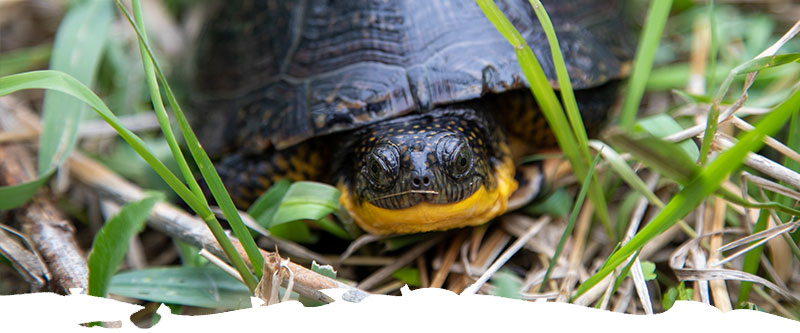
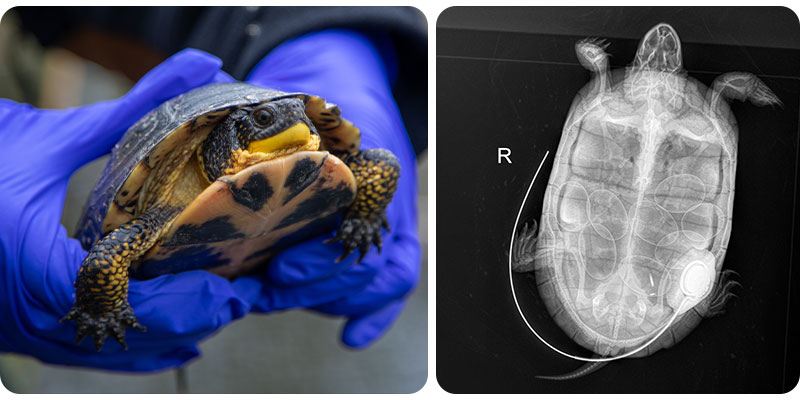
We are thrilled to see the first evidence of these turtles reproducing independently in the wild, especially at 13 years of age, given that wild turtles typically reach sexual maturity between 14 and 18 years of age. This year we discovered a headstart turtle released into the Rouge in 2015 has eggs! This is a particularly important update to our ultimate goal of restoring a self-sustaining population in the Rouge River Watershed. Headstarting may have contributed to this earlier onset of maturity, which could positively influence population growth by increasing reproductive output within the population and supporting long-term population sustainability.
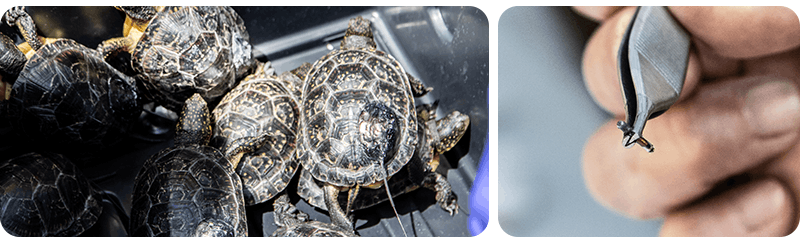
It is crucial for the long-term success of the program that the headstart turtles are able to breed independently, sustaining the restored population by themselves. The next phase of research will focus on gathering additional data and ensuring wild eggs have a viable chance at survival. Alongside continuing to monitor the gravid (“pregnant”) turtle, your Toronto Zoo Field Conservation team has placed a global positioning system (GPS) biologger on her that will give us vital information on her nesting activity and location. This underscores the importance of our post-release research and our recent shift to emphasize monitoring of older headstarts and nesting behaviour, while also strengthening the partnerships that make these efforts possible.
At a time when many Ontario species are under threat of habitat loss and extinction, this program is of particular importance as we work to ensure populations survive AND recover. This collaborative initiative, co-led by your Toronto Zoo and Parks Canada, is part of recovery efforts to conserve this endangered species in the Greater Toronto Area.
|
|
|
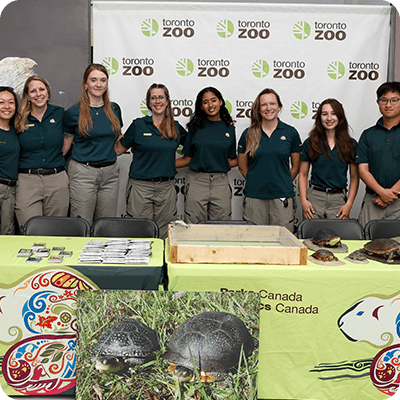
Pictured: Dolf DeJong, CEO, your Toronto Zoo
|
|
“At your Toronto Zoo our mission is to connect people, animals, conservation science and traditional knowledge to fight extinction” says Dolf DeJong, CEO, Toronto Zoo. “Conservation requires patience. Blanding's turtles can take approximately 14 to 20 years to reach sexual maturity. That means the true measure of success isn't counted in months or even years. It's counted in generations.”
|
|
|
What is the Blanding’s Turtle Headstarting Program, and why is it important?
The Rouge River watershed has changed drastically over the past 200 years, and this has had major consequences for the animals that live there. Historically, this area was home to the Blanding’s turtle, which is currently a federally and globally endangered species. As of 2012, fewer than 10 adult Blanding’s turtles were found in the area that is now Rouge National Urban Park, which is not nearly enough to support a healthy and sustainable population. As a result, our headstart program began.
The Blanding’s turtles released through this program each year are two-year-olds, to ensure they are big and strong enough to thrive in their new environment. Each June, eggs are collected from stable source populations in Ontario and are then incubated for around two months to ensure proper development, and to keep them safe from predators at such a vulnerable stage. Once they hatch, these tiny turtles spend their first year in the Americas Pavilion where guests can visit them, and after their first birthday, they move to the Wildlife Health and Science Centre to spend their days swimming and sunning themselves under UV lights. Once they reach two years of age, the turtles move to outdoor enclosures to acclimate to the elements, like daily weather changes, sounds, and sights, to prepare them for release. The release takes place in different locations each year and is kept top-secret to mitigate the threat of poaching.
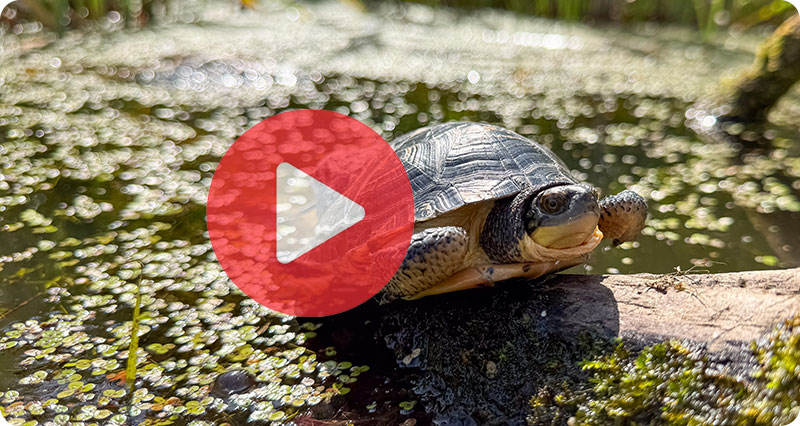
Footage of the 2026 annual Blanding's turtle release
|
|
|
|
Why is the 13th year significant?
Turtles hold special significance for many Indigenous Nations on Turtle Island (what is now called Canada and the United States). Turtles appear in many traditional teachings and Creation stories and play an essential role in the Creation story, as the Earth is formed on its back. As this is the 13th year releasing the headstart turtles, there is an additional Indigenous significance.
In many Indigenous Nations, the cycles of Grandmother Moon relate to the changing of the seasons. In every year, there are thirteen of those moon cycles, each with twenty-eight days from one new moon to the next. As such, the Turtle’s back is a calendar, with its pattern of thirteen large scutes standing for the thirteen moons of each year. It reminds us that all things are connected and we must try to live in balance.
“Now in its 13th year, the Blanding’s Turtle Headstarting program reflects the strong and enduring partnership between Parks Canada and the Toronto Zoo, alongside Indigenous communities and conservation partners committed to species recovery,” said the Honourable Julie Dabrusin, Minister of the Environment, Climate Change and Nature and Member of Parliament for Toronto–Danforth. “The federal government supports these collaborative efforts and the key role they play in restoring one of Ontario’s most at-risk species and protecting the health of sensitive ecosystems in Rouge National Urban Park. Each of the turtles raised and released through the program this year represents a meaningful step toward rebuilding a healthy, self-sustaining population, advancing the species’ long-term recovery and strengthening crucial native wetland habitats for future generations.”
|
|
|
How are the turtles monitored in the wild?
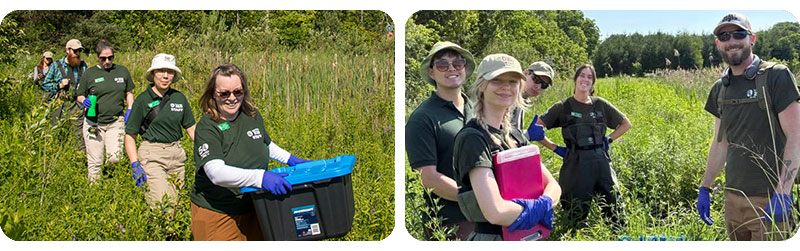
You may be wondering how we keep track of the turtles if they were released more than a decade ago? One of the most important aspects of this process is being able to keep tabs on what happens to these juveniles once they leave your Toronto Zoo’s care. Some of the turtles are fitted with small radio transmitters which attach to their shells and allow Toronto Zoo researchers to monitor their locations, as well as movement patterns, habitat use and behaviour over time. This not only allows scientists to monitor their survival but also provides invaluable information about their growth rates and how environmental factors like temperature and precipitation play a role in their behaviour.
This is critical information for land managers, so they can restore suitable wetland areas where aquatic animals can thrive. Parks Canada has been working with partners to maintain and restore wetlands throughout Rouge National Urban Park, with the long-term ecological goal of building an interconnected “string of pearls” of wetlands for wildlife like Blanding’s turtles to use.
|
|
|
Who else is involved in helping the Blanding’s turtles?
Your Toronto Zoo also works closely with the following organizations:
|
|
|
- City of Toronto
- Toronto Zoo Wildlife Conservancy
- Georgian Bay Mnidoo Gamii Biosphere
- Laurentian University
- Magnetawan First Nation
- Ministry of the Environment, Conservation, and Parks
- Ministry of Natural Resources and Forestry
- Shawanaga First Nation
- Toronto and Region Conservation Authority
- University of Toronto Scarborough
- Nuclear Waste Management Organization
- EcoKare International
|
|
|
|
How can you help the Blanding’s turtles?
Each year, the release of Blanding’s turtles into the Rouge National Urban Park highlights the impact of long-term conservation efforts to recover this federally and globally endangered species. As part of this broader initiative, the Toronto Zoo Wildlife Conservancy’s annual Headstart Hero campaign invites the community to play a direct role in this work by naming a turtle.
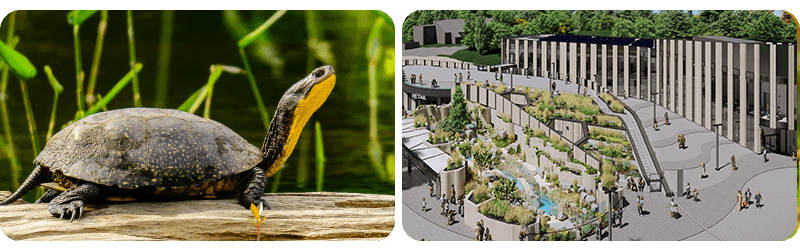
Funds raised through this initiative support the Toronto Zoo’s Blanding’s Turtle Headstarting program, helping to provide essential equipment such as egg incubation supplies, turtle tank heaters, UV fixtures, and tracking transmitters. Contributions also support the new home of the program located within the Community Conservation Centre.
This dedicated space will become a centre for incubation, care, and education, offering Zoo guests a closer look at hatchlings through public viewing galleries and interactive displays that bring the Toronto Zoo’s conservation work to life.
If you are inspired by this work, please consider making a donation today to help complete construction of the new Community Conservation Centre and support the future of this vital program below:
|
|
|
The Toronto Zoo’s mission is to connect people, animals, conservation science and traditional knowledge to fight extinction and our vision is a world where people, wildlife and wild spaces thrive.
An iconic tourist attraction and Conservation organization, the Toronto Zoo boasts a number of leading programs for helping wildlife and their natural habitats – from species reintroduction to reproductive research. A world-class educational centre for people of all ages, the Toronto Zoo is open every day including December 25 and attracts approximately 1.3 million guests each year.
Toronto Zoo is accredited by the Association of Zoos and Aquariums (AZA). The Zoo has also achieved the Canadian Council on Animal Care (CCAC) Certificate of Good Animal Practice® and is inspected by the Ontario Ministry of Agriculture, Food and Agribusiness (OMAFA).
Toronto Zoo, 361A Old Finch Ave, Toronto ON, M1B 5K7
View Toronto Zoo’s Privacy Statement
We acknowledge the land we are on is the traditional territory of many nations including the Mississaugas of the Credit, the Anishnabeg, the Chippewa, the Haudenosaunee and the Wendat peoples and is now home to many diverse First Nations, Inuit and Métis peoples. We also acknowledge that Toronto is covered by Treaty 13 with the Mississaugas of the Credit and the Williams Treaty signed with multiple Mississaugas and Chippewa bands.
|
© 2026 Toronto Zoo All Rights Reserved.
|
|
|
|