Study tracking tapirs and giant anteaters in Brazil links plastic burdens to human land use
|
TORONTO, ON, Friday, November 20, 2026 - Your Toronto Zoo is proud to celebrate the work of its Chief Science Officer, Dr. Gabriela Mastromonaco, whose research on microplastic pollution has been featured in Nature. The study highlights a sobering reality: microplastics are now pervasive throughout the environment, and no species is immune to their impact.
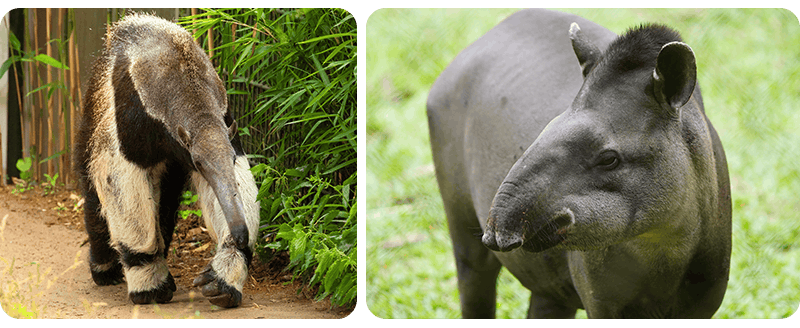
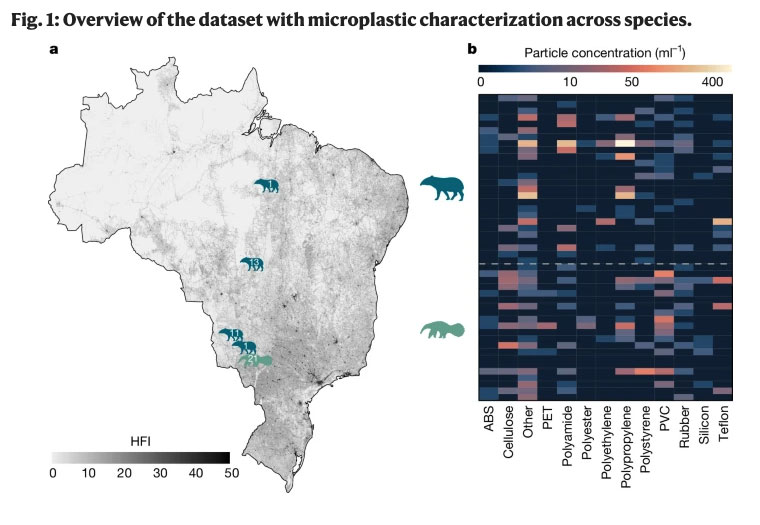
The study, led by UBC Okanagan researchers Dr. Michael Noonan and Dr. Marcia Ferraz, was a highly collaborative international effort involving the Toronto Zoo, Ludwig Maximilian University of Munich, Instituto de Conservação de Animais Silvestres, Instituto de Pesquisas Ecológicas, and partner institutions across Brazil, Germany, Italy, the United Kingdom, and the United States. By combining blood samples from free-ranging lowland tapirs and giant anteaters with high-resolution GPS tracking data collected across the Amazon Arc of Deforestation, the Cerrado agricultural landscape, and the Pantanal wetland, the researchers were able to link microplastic burdens to patterns of habitat use and human influence on the landscape. The study found that animals living closer to human development and waste management facilities carried higher concentrations of microplastics in their blood. Notably, microplastics were also detected in wildlife inhabiting remote regions far from the nearest towns and waste sites, underscoring the widespread nature of plastic pollution. While the investigation focused on measuring exposure rather than health effects, the authors emphasize that determining the biological consequences of microplastic contamination remains a critical next step for understanding the implications for wildlife conservation and ecosystem health.
|
|
|
Dr. Gabriela Mastromonaco, Toronto Zoo Chief Science Officer
|
|
“This work confirms that remoteness no longer safeguards against plastic pollution, emphasizing the urgency of reducing plastic waste and advancing solutions that prevent plastics from entering natural ecosystems,” said Dr. Mastromonaco.
The findings come at a time when global attention is increasingly focused on solutions to biodiversity loss, pollution, and climate change. Earlier this week, at the 2026 Earthshot Prize Summit, whose mission is to accelerate solutions capable of repairing the planet by 2030, the winner of the Build a Waste-Free World Earthshot was PFAS-Free France in recognition of its efforts to eliminate persistent environmental contaminants.
|
|
|
Plastic pollution intersects with all five Earthshots: Protect and Restore Nature, Revive Our Oceans, Clean Our Air, Build a Waste-Free World, and Fix Our Climate. Research has shown that microplastics are now widespread in air, water, and soil, influencing environmental processes and affecting living organisms across ecosystems. What was once viewed as an innovative and transformative material is now recognized for its persistence and potential ecological and health consequences.
The Nature study builds on earlier work by Drs. Mastromonaco and Ferraz. Their 2025 Anthropocene Review paper explored how microplastics, either directly or through interactions with endocrine-disrupting contaminants, can impair reproduction in humans, animals, and plants. Together, these studies highlight the growing body of evidence linking plastic pollution to risks for wildlife and ecosystem health.
Reducing plastic waste is a key component of the Toronto Zoo's conservation and sustainability efforts. Through initiatives that eliminate or reduce single-use plastics, improve waste diversion and recycling practices, promote sustainable procurement, and educate visitors about the impacts of plastic pollution, the Zoo works to lessen its environmental footprint while inspiring positive action.
|
|
|
The Toronto Zoo’s mission is to connect people, animals, conservation science and traditional knowledge to fight extinction and our vision is a world where people, wildlife and wild spaces thrive.
An iconic tourist attraction and Conservation organization, the Toronto Zoo boasts a number of leading programs for helping wildlife and their natural habitats – from species reintroduction to reproductive research. A world-class educational centre for people of all ages, the Toronto Zoo is open every day including December 25 and attracts approximately 1.3 million guests each year.
Toronto Zoo is accredited by the Association of Zoos and Aquariums (AZA). The Zoo has also achieved the Canadian Council on Animal Care (CCAC) Certificate of Good Animal Practice® and is inspected by the Ontario Ministry of Agriculture, Food and Agribusiness (OMAFA).
Toronto Zoo, 361A Old Finch Ave, Toronto ON, M1B 5K7
View Toronto Zoo’s Privacy Statement
We acknowledge the land we are on is the traditional territory of many nations including the Mississaugas of the Credit, the Anishnabeg, the Chippewa, the Haudenosaunee and the Wendat peoples and is now home to many diverse First Nations, Inuit and Métis peoples. We also acknowledge that Toronto is covered by Treaty 13 with the Mississaugas of the Credit and the Williams Treaty signed with multiple Mississaugas and Chippewa bands.
|
© 2026 Toronto Zoo. All Rights Reserved.
|
|
|
|