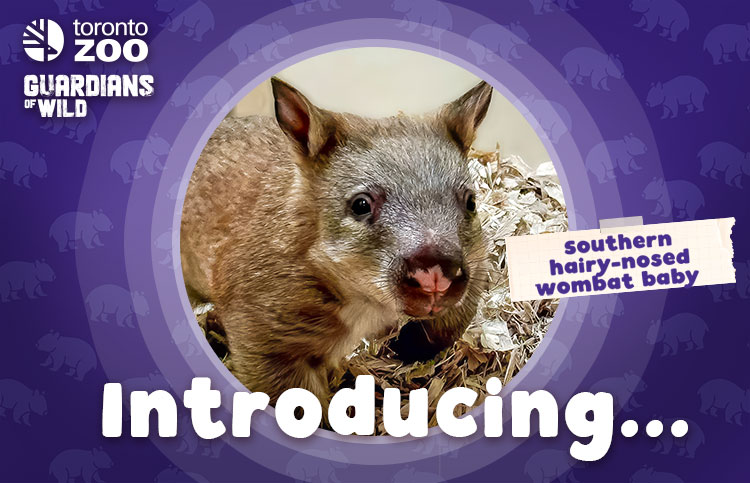
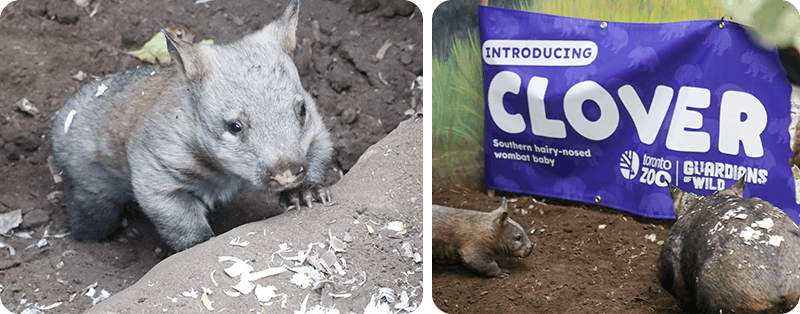
“The naming of this wonderful joey is a celebration of the unique bond between Australia and Canada. Wombats hold a special place in the hearts of Australians, and it is heartwarming to see Canadians welcome this little ambassador to the Toronto Zoo. We have been overjoyed to see how enthusiastically our Canadian friends have embraced little Clover and we look forward to watching Clover engage with Toronto Zoo guests. We are sure that she will be a delightful marsupial member of the Zoo community,” said Kate Logan, Australian High Commissioner to Canada.
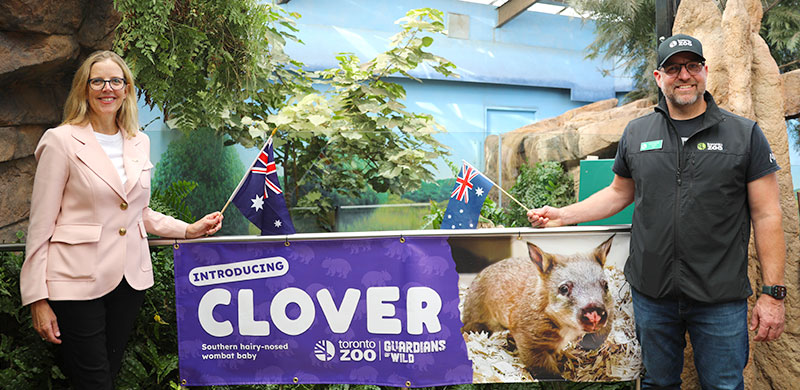
Pictured from left to right: Shelley Jackson, Consul General of Australia and Dolf DeJong, CEO of Toronto Zoo
|
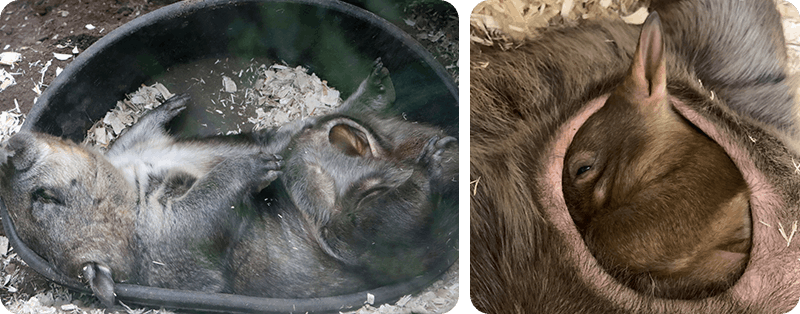
Ever wonder what goes on in that pouch?
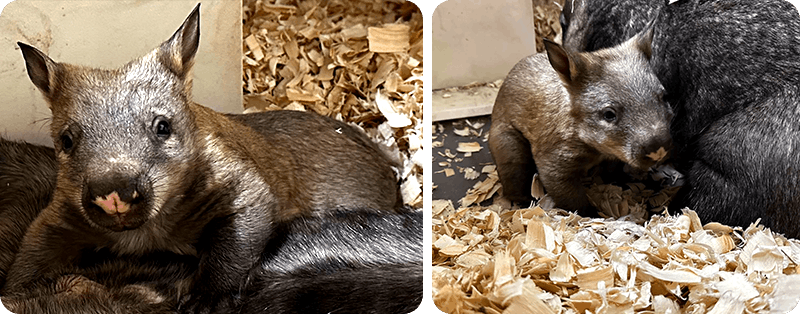
Wombats are marsupials and their pregnancies only last for about three weeks: most of a joey's development happens outside the womb, in the pouch. At birth, the baby wombat is about the size of a jellybean, weighing half a gram. They are born naked, blind and their back legs are yet to develop. They claw their way through their mother's fur and enter the pouch. Inside the warm, soft pouch, the joey fastens on to a teat to nurse for about four months. Their eyes open when they are four months old and at six months they can put their nose out of the pouch, though they will not venture outside to explore for at least another month or two. By ten months they will leave their mother's pouch permanently and follow at their mother’s heels while learning how to burrow and graze.
Southern hairy-nosed wombat females invest heavily in their young. As the joey grows and their nutritional needs change, the mother’s body adapts the composition of her milk over nearly a year of nursing, increasing the amount of fat and decreasing the amount of carbohydrate to support the joey through each stage of development.
A win for your Toronto Zoo
Clover is the result of years of planning and fine-tuning by Toronto Zoo staff, with support from other zoos that care for wombats. Breeding behaviour was observed between Mom Matilba and Dad Arthur in January, and in early April we observed “fluttering movements” in Matilba’s pouch region – the first indication that a baby was present. Clover is a meaningful addition to your Toronto Zoo, as she is only the second wombat successfully reared here. The first joey, a female named Nan (1994-2018), is Clover’s great-grandmother!
What’s next for Clover?
Clover is getting braver by the day, and is no longer in Matilba’s pouch - only sticking her mouth in to feed. If you’re visiting the Australasia Pavilion you may be able to catch a glimpse of her exploring the habitat, but like any baby, she’s very much on her own schedule!
Southern hairy-nosed wombats in the wild
Southern hairy-nosed wombats are currently listed as Least Concern on the IUCN Red List, with drought, habitat changes and competition for food among the challenges they face in the wild. They inhabit the semi-arid and arid grasslands and woodlands of southeastern Western Australia, southern South Australia, and southwestern New South Wales. The current trend towards a dryer climate in arid southern Australia could be a serious threat. They breed once yearly, if optimal rainfall conditions occur, without which there is not enough grass to sustain the young through their growth. Wombats born during a drought have little chance of survival. Additionally, overgrazing of the land can destroy perennial grasses in favor of annual grasses that do not meet the nutritional needs of juvenile wombats.
Their future in other parts of Australia is uncertain due to persecution for being “pests” and for competing with sheep and cattle for food.
Donor support helps to secure a brighter future for species like the new wombat joey. Make a gift today to support the Toronto Zoo’s conservation science efforts and the well-being of all animals under the Zoo’s care. To learn more and give securely through our fundraising partner, the Toronto Zoo Wildlife Conservancy, please visit the link below: