Viewable
Location at the Zoo
African Rainforest
Global Range
Africa
Tomato frog
Dyscophus guineti
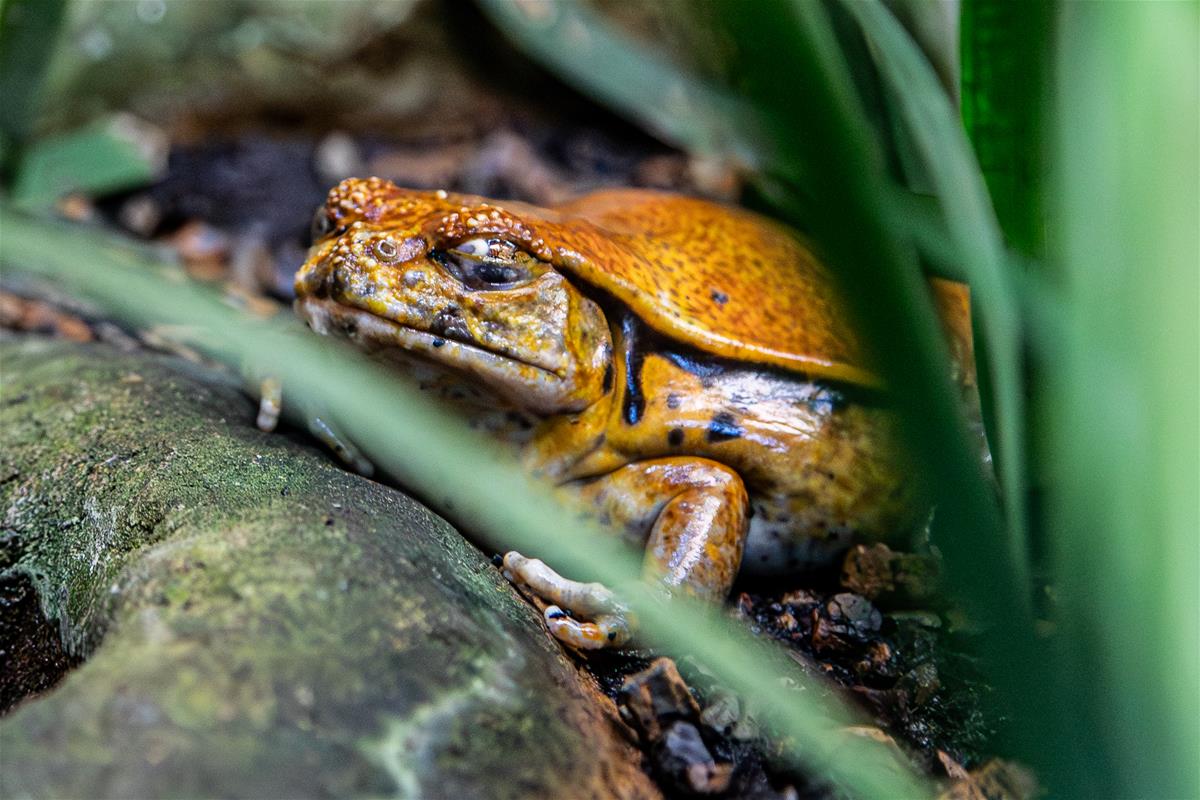
The Tomato Frog is a stout, ground-dwelling amphibian named for its bright red to orange colouration, which resembles a ripe tomato. Adults typically measure 6 to 10 centimetres in length, with females significantly larger than males. The body is round and robust, with short limbs and smooth skin. Colour intensity varies between individuals and populations, ranging from vivid red to orange-brown.
This species is mostly nocturnal and spends much of its time buried in soft soil or leaf litter, emerging at night to feed. When threatened, the Tomato Frog inflates its body and may secrete a sticky, milky substance from its skin that can irritate the mouth and eyes of predators. Its bold colouration serves as a warning that it is unpalatable.
HEAD AND BODY LENGTH
Typically 6–10 centimetres.
WEIGHT
Large females may weigh up to 230 grams; males are considerably lighter.
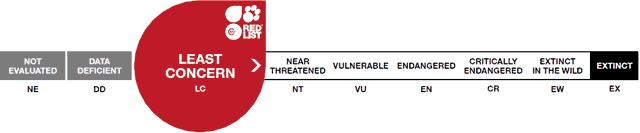
Conservation Status: IUCN
Distribution
Occurs primarily in eastern Madagascar, particularly in coastal lowlands, marshes, and areas near slow-moving water.
Habitat
Inhabits wetlands, marshes, ponds, rice paddies, and forest edges. It prefers areas with soft, moist soil where it can burrow during the day. Seasonal rainfall strongly influences activity and breeding.
Diet
Carnivorous. Feeds on insects, worms, snails, and other small invertebrates captured at night. Its wide mouth and sit-and-wait hunting strategy allow it to consume relatively large prey.
Reproduction
Breeding occurs during the rainy season. Females lay hundreds to thousands of eggs in shallow, temporary pools or flooded areas. Tadpoles develop rapidly, metamorphosing in as little as six to eight weeks, an adaptation to ephemeral water bodies.
Adaptations
Bright red colouration functions as a warning signal to predators. The ability to inflate its body makes the frog harder to swallow, while skin secretions deter predators through irritation. Burrowing behaviour helps prevent dehydration and allows survival during dry periods.
Threats to Survival
Primary threats include habitat loss due to wetland conversion, agricultural expansion, and pollution. Climate change may affect breeding success by altering rainfall patterns. Despite these pressures, the species remains relatively common in suitable habitat.