Viewable
Location at the Zoo
Australasia
Global Range
Australia
Stimson’s Python
Antaresia stimsoni
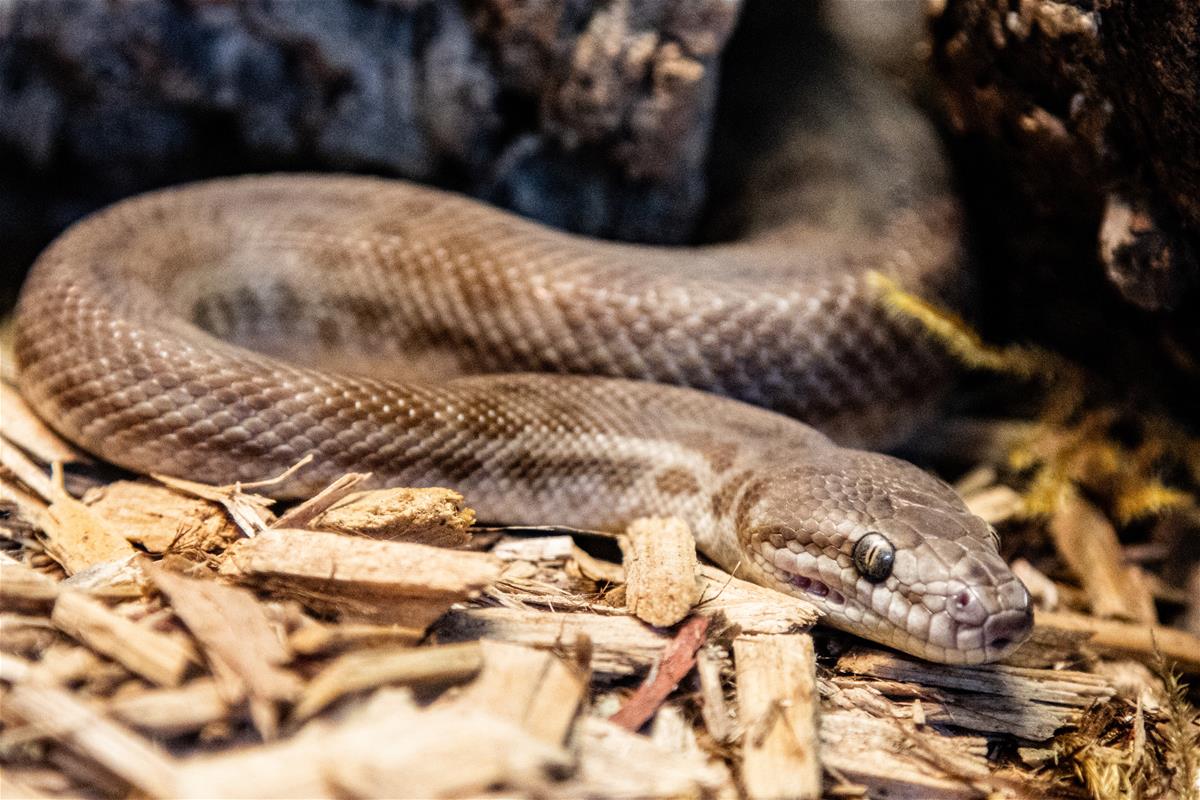
Stimson’s Python is a small, non-venomous python known for its slender build, variable patterning, and calm disposition. Adults typically measure 90 to 120 centimetres in length, making it one of Australia’s smaller python species. Colouration varies widely depending on location and habitat, ranging from light tan or sandy brown to reddish or grey tones, often marked with darker blotches or bands that provide effective camouflage.
This species is primarily nocturnal and spends daylight hours sheltering in rock crevices, hollow logs, or burrows. It is a capable climber but is most often encountered on the ground or among low vegetation. In zoological settings, Stimson’s Python is frequently used to introduce visitors to Australian snakes due to its manageable size and adaptable nature.
HEAD AND BODY LENGTH
Typically 90–120 centimetres.
WEIGHT
Most adults weigh between 400 and 900 grams.
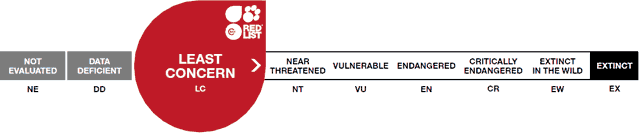
Conservation Status: IUCN
Distribution
Occurs across much of western, central, and northern Australia, including arid and semi-arid regions as well as tropical savannas. Its range overlaps with several closely related Antaresia species.
Habitat
Occupies a variety of environments, including rocky outcrops, open woodlands, grasslands, shrublands, and arid zones. It relies on natural shelters such as cracks in rocks, abandoned burrows, and fallen timber to escape heat and predators.
Diet
Feeds primarily on small mammals, particularly rodents, as well as small birds and reptiles. Like other pythons, it kills prey by constriction. Its role in controlling rodent populations contributes to ecosystem balance, especially in agricultural areas.
Reproduction
Breeding generally occurs in spring. Females lay 5 to 15 eggs, which they incubate by coiling around the clutch and generating warmth through muscle contractions. Eggs hatch after about 50 to 60 days, and hatchlings are independent immediately after emergence.
Adaptations
Stimson’s Python shows strong adaptations for life in variable climates. Its cryptic colouration provides camouflage across different substrates, while behavioural flexibility allows it to exploit a wide range of shelters. Like other pythons, it can sense infrared heat using labial pits, aiding in hunting warm-blooded prey at night.
Threats to Survival
Local threats include habitat disturbance, road mortality, and persecution due to fear or misidentification as venomous snakes. However, the species’ adaptability and wide distribution currently buffer it against significant decline.