Viewable
Location at the Zoo
African Rainforest
Global Range
Africa
South African crested porcupine
Hystrix africaeaustralis
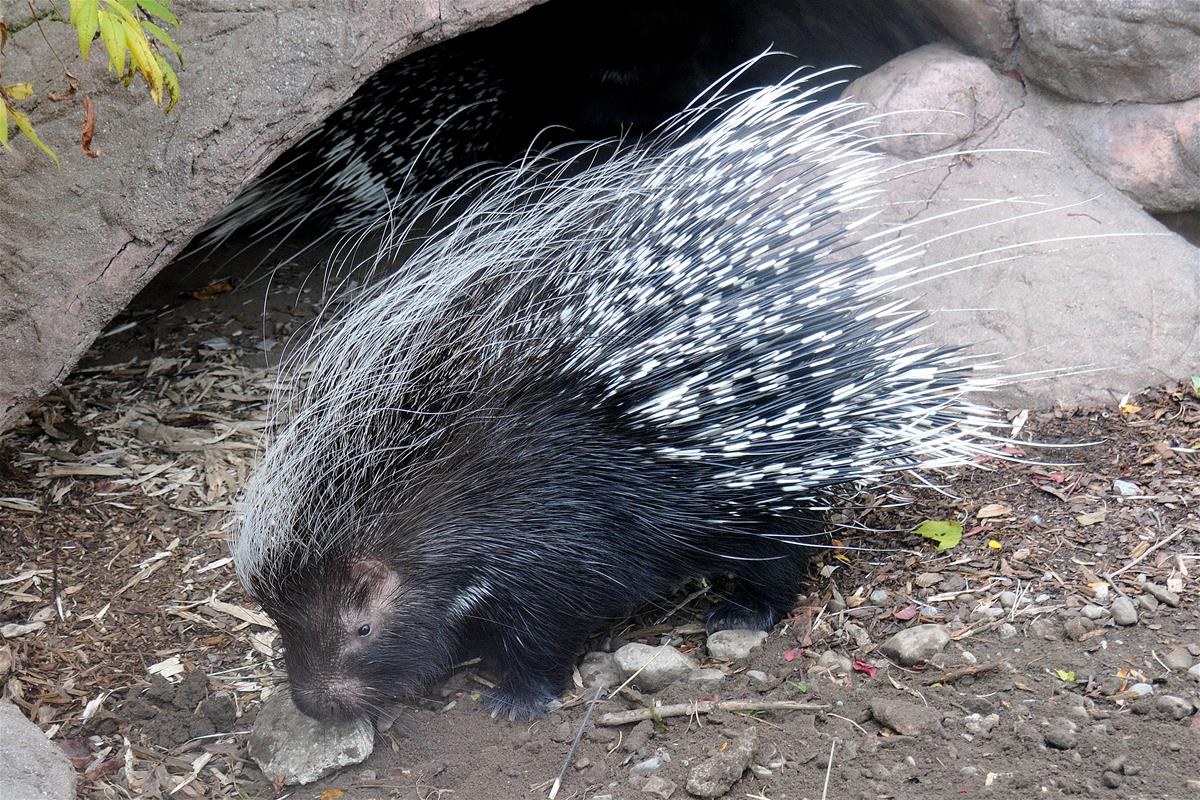
The Cape Porcupine is the largest rodent in Africa and one of the largest porcupine species in the world. Adults typically measure 60 to 85 centimetres in body length and can weigh between 15 and 30 kilograms. The body is stocky and low to the ground, covered in long, sharp black-and-white quills interspersed with shorter bristles. A raised crest of quills along the head and shoulders gives the species its imposing appearance.
Despite its size and formidable defences, the Cape Porcupine is generally slow-moving and non-aggressive. When threatened, it raises its quills, stamps its feet, rattles specialized hollow quills at the tail to produce a loud warning sound, and may charge backward toward a perceived threat. The quills do not shoot out but detach easily upon contact. This species is mostly nocturnal and spends daylight hours resting in burrows, rock crevices, or abandoned dens.
HEAD AND BODY LENGTH
Typically 60–85 centimetres.
WEIGHT
Usually between 15 and 30 kilograms.
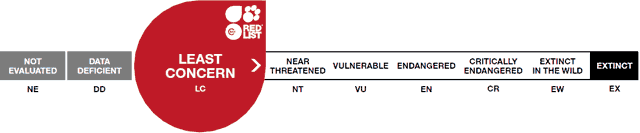
Conservation Status: IUCN
Distribution
Occurs across a broad area of sub-Saharan Africa, particularly in southern and eastern regions. It is absent from true deserts and dense rainforests but occupies a wide range of intermediate habitats.
Habitat
Cape Porcupines inhabit savannas, grasslands, woodlands, rocky hillsides, and agricultural areas. They rely on burrows for shelter, which may be self-dug or taken over from other animals such as aardvarks. These burrow systems can be extensive and are often used for many years by the same individuals or family groups.
Diet
This species is primarily herbivorous, feeding on roots, tubers, bulbs, bark, fallen fruit, and cultivated crops. It is also known to gnaw on bones and antlers, likely to obtain minerals such as calcium and phosphorus needed for quill growth. Foraging usually takes place at night, with individuals travelling considerable distances from their burrows.
Reproduction
Cape Porcupines form long-term pair bonds and are often found in monogamous pairs or small family groups. Females give birth to one to two well-developed young after a gestation period of approximately 90 to 112 days. Newborns are born with soft quills that harden within a few days. Young porcupines remain with their parents for several months and learn burrow use and foraging routes before dispersing.
Adaptations
The species’ quills provide an effective physical defence when combined with visual and auditory warning behaviours. Thick skin beneath the quills offers added protection. Strong claws and incisors support digging and allow access to underground food sources. Nocturnal habits help reduce exposure to predators and extreme daytime temperatures, while a flexible diet enables survival across varied environments.
Threats to Survival
Local threats include hunting, conflict with farmers, road mortality, and habitat fragmentation. Expansion of agriculture can both reduce natural food sources and increase human-wildlife conflict. Despite these pressures, the species’ adaptability and wide distribution currently buffer it against significant population decline.