Temporarily Not Viewable
Actinopterygii
Location at the Zoo
Indo-Malaya
Global Range
Southeast Asia
Red-lined Torpedo Barb
Sahyadria denisonii
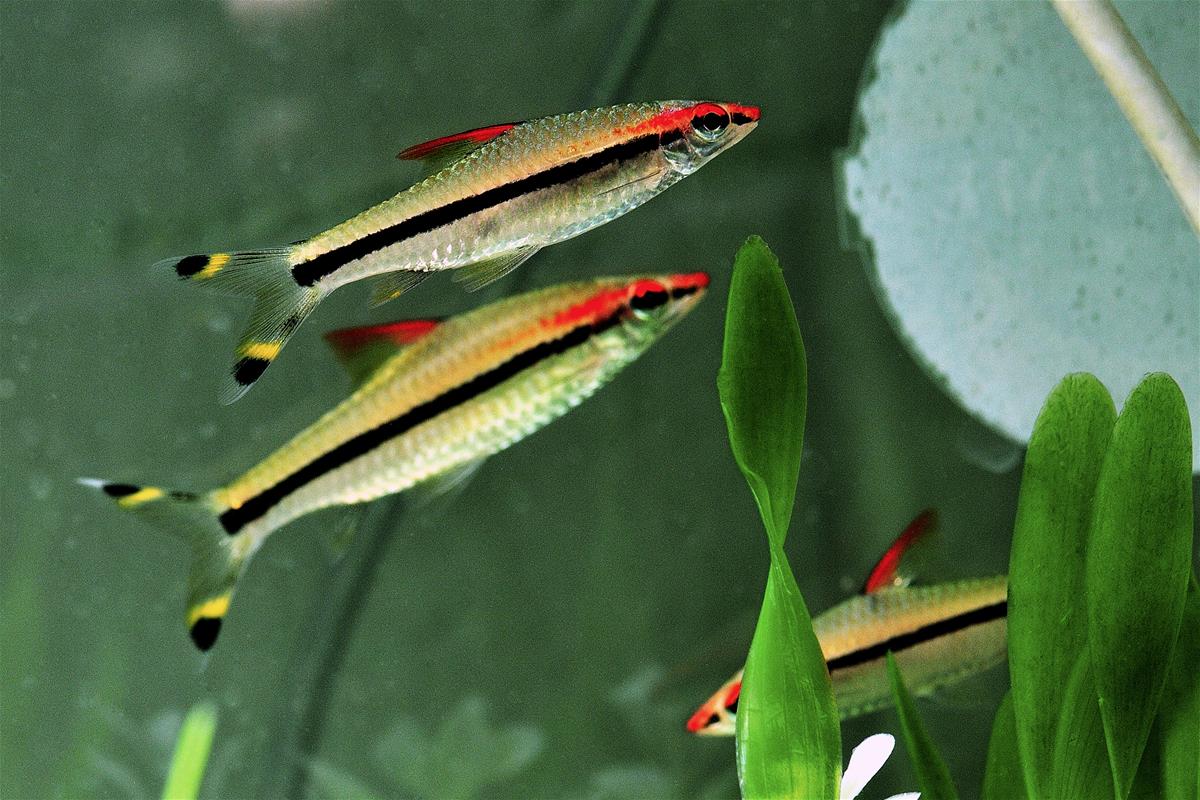
The Red-lined Torpedo Barb is a sleek, fast-swimming freshwater fish recognized by its torpedo-shaped body and striking colour pattern. Adults typically reach 12 to 15 centimetres in length. The body is silver to pale gold, marked by a bold red stripe running from the snout through the eye along the length of the body, paired with a contrasting black stripe below it. The tail fin is tipped with black and yellow, adding to the fish’s distinctive appearance.
This species is highly active and social, naturally forming schools that move quickly through flowing water. Its streamlined body and strong swimming ability reflect its adaptation to riverine habitats. In aquariums and zoo exhibits, it is often used to highlight the biodiversity of India’s freshwater ecosystems and the conservation challenges faced by endemic river species.
HEAD AND BODY LENGTH
Usually 12–15 centimetres.
WEIGHT
Light-bodied; typically a few tens of grams.
Conservation Status: IUCN
Distribution
Restricted to a small number of river systems in the Western Ghats of southern India, one of the world’s recognized biodiversity hotspots.
Habitat
Inhabits clear, fast-flowing hill streams and rivers with rocky substrates and high oxygen levels. It prefers areas with moderate current, shaded banks, and stable water quality. Seasonal monsoon cycles strongly influence habitat availability and breeding conditions.
Diet
Omnivorous. Feeds on algae, biofilm, plant matter, insects, and small invertebrates. In the wild, it grazes on submerged surfaces and captures drifting prey in flowing water.
Reproduction
In the wild, breeding is closely linked to seasonal monsoon rains, which trigger changes in water flow and temperature. Eggs are scattered among gravel or aquatic vegetation, with no parental care after spawning. Captive breeding has been successfully established and now plays an important role in conservation and education.
Adaptations
The streamlined body shape and powerful tail enable efficient swimming in strong currents. Bold lateral striping may aid in school cohesion and species recognition. High oxygen tolerance and sensitivity to water quality reflect adaptation to clean, fast-moving freshwater environments. Its schooling behaviour improves predator awareness and foraging efficiency.
Threats to Survival
Primary threats include river pollution, damming and water diversion, sand mining, and historical overharvesting for the aquarium trade. Climate change may further alter rainfall patterns and stream flow in the Western Ghats, reducing suitable habitat. Because of its limited range, localized impacts can have significant population-level effects.