Viewable
Location at the Zoo
Americas Outdoor Mayan Temple Ruins
Global Range
South America
Red-legged Seriema
Cariama cristata
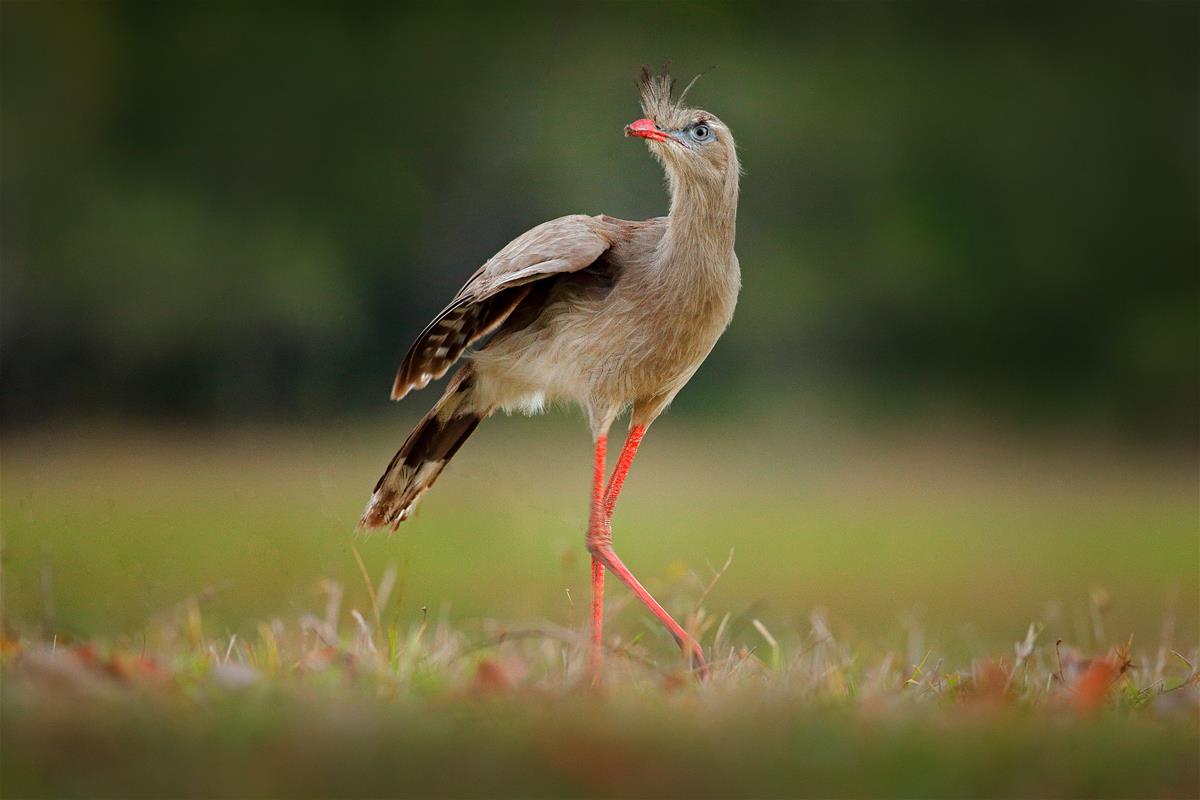
The Red-legged Seriema is a tall, long-legged terrestrial bird recognized for its reddish-orange legs, slender body, and distinctive crest of stiff feathers at the base of the beak. Adults typically stand 75 to 90 centimetres tall and weigh between 1.5 and 2.5 kilograms. The plumage is mostly grey-brown with fine barring that blends well with dry grassland and scrub habitats.
Although capable of flight, the seriema spends most of its time on the ground, moving with quick strides through open landscapes while searching for prey. Its loud, far-carrying calls are among its most recognizable features and are often delivered in duets by pairs, particularly at dawn. In zoological settings, the species is often appreciated for its unusual appearance and its evolutionary connection to ancient predatory birds.
HEAD AND BODY LENGTH
Approximately 75–90 centimetres in height.
WEIGHT
Typically between 1.5 and 2.5 kilograms.
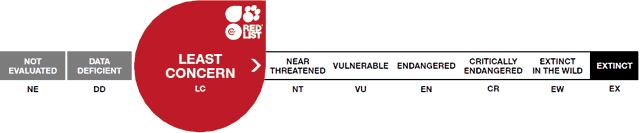
Conservation Status: IUCN
Distribution
Occurs across much of central and eastern South America, especially in Brazil and surrounding countries.
Habitat
Prefers savannas, grasslands, scrublands, open woodland, and dry forest edges. It is most commonly associated with open areas that provide visibility for detecting prey while still offering scattered cover for nesting and shelter.
Diet
Omnivorous but strongly predatory. Feeds on insects, lizards, snakes, small rodents, frogs, eggs, and occasionally fruit and seeds. The seriema is especially known for its behaviour of striking prey against the ground or rocks to kill or dismember it before eating.
Reproduction
Breeding pairs build nests from sticks and vegetation in shrubs or low trees. Females usually lay two eggs, and both parents participate in incubation and chick care. Young birds remain with the adults for an extended period while learning foraging and territorial behaviours.
Adaptations
Long legs and strong feet allow efficient running through grassland habitats, while excellent eyesight helps detect prey at a distance. Its loud vocalizations support territory defence and pair bonding across large open areas. The hooked beak aids in handling prey, and its powerful neck muscles help deliver forceful strikes when subduing animals.
Threats to Survival
The primary threats include habitat conversion for agriculture, pesticide exposure, and occasional hunting. Despite these pressures, the species remains widespread and adaptable across much of its range.