❄️ Off for the Season
Location at the Zoo
Kids Zoo
Global Range
Africa
Radiated Tortoise
Astrochelys radiata
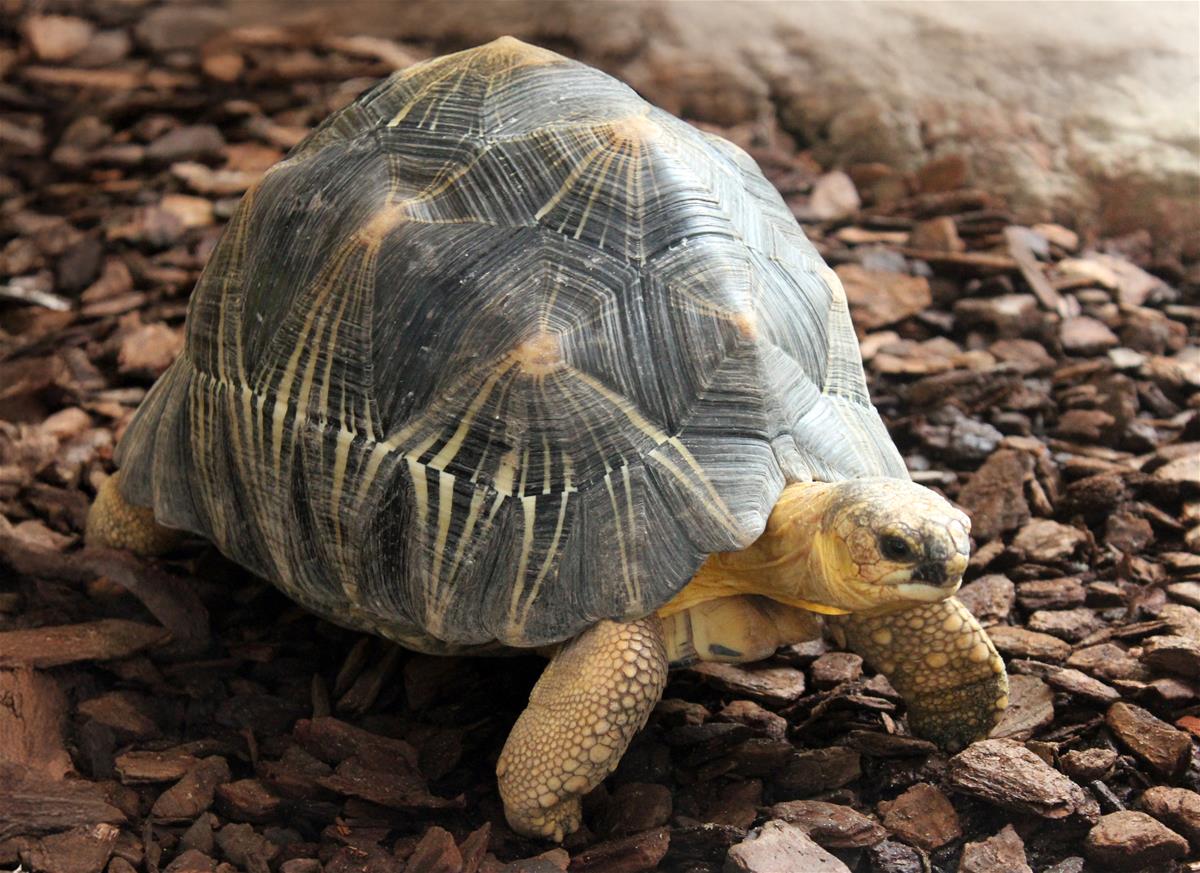
The Radiated Tortoise is one of the most visually striking tortoises in the world, renowned for the bold yellow and black star-like patterns radiating from the centre of each scute on its shell. Adults commonly reach 30 to 40 centimetres in shell length, with some individuals growing larger. The shell is high-domed and smooth, while the limbs are thick and scaly, adapted for life in dry environments.
This species moves slowly and deliberately through its habitat, feeding primarily on low vegetation. Its dramatic shell pattern not only makes it a favourite among visitors but also an important ambassador species for conservation, highlighting the unique biodiversity of Madagascar and the threats it faces.
HEAD AND BODY LENGTH
Shell length typically ranges from 30–40 centimetres.
WEIGHT
Adults generally weigh between 13 and 19 kilograms.
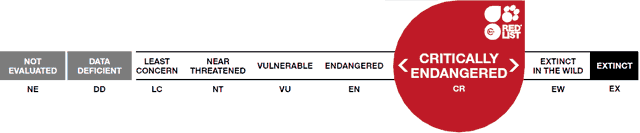
Conservation Status: IUCN
Distribution
Restricted to southern Madagascar, where it occurs patchily within remaining suitable habitat.
Habitat
Inhabits dry spiny forest, scrubland, and semi-arid regions dominated by thorny plants. The species is well adapted to hot, dry climates and often shelters under vegetation during the hottest parts of the day.
Diet
Herbivorous. Feeds on grasses, succulents, leaves, flowers, and fallen fruit. Its diet includes many fibrous and drought-tolerant plants, and it obtains much of its moisture from food rather than direct water sources.
Reproduction
Breeding typically occurs during the warmer months. Females lay 3 to 12 eggs in shallow nests dug into sandy soil. Incubation lasts several months, and hatchlings emerge during favourable weather conditions. The species has a slow growth rate and long lifespan, which contributes to slow population recovery.
Adaptations
The radiating shell pattern may help regulate temperature by reflecting sunlight while also providing camouflage among dappled light and vegetation. Thick, columnar legs support movement across rough, dry terrain. A slow metabolism and efficient water use allow survival in arid environments.
Threats to Survival
Major threats include illegal harvesting for food, poaching for the pet trade, habitat destruction, and loss of traditional cultural protections. Because the species matures slowly and reproduces at a low rate, populations are especially vulnerable to overexploitation.