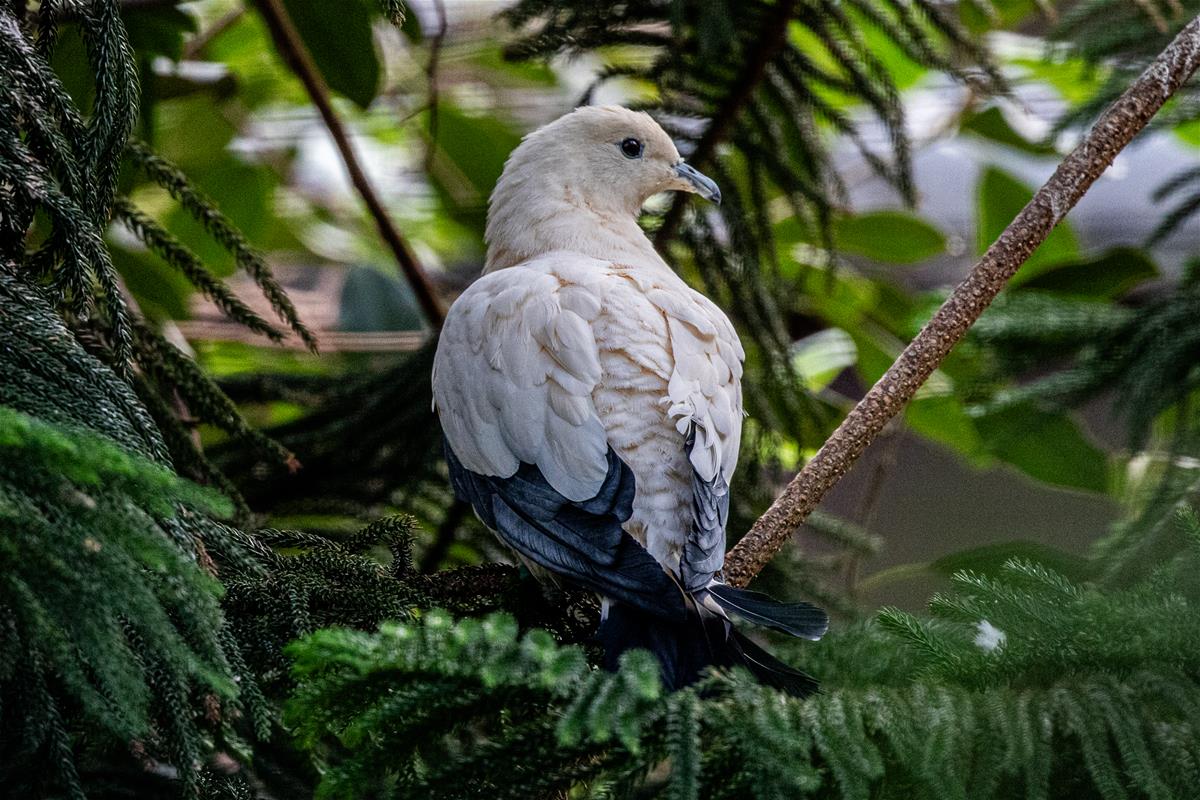
Pied imperial pigeon
Ducula bicolor
Order: Columbiformes
Family: Columbidae
Genus: Ducula
Large, plump pigeons. Their feathers are usually white, with black wing tips and black on the tips of the tail feathers. The beak is dark-tipped and bluish in colour. They eat large amounts of fruit and over time, their heads sometimes becomes stained to a brownish hue.
Length 37 to 44 cm. Wingspan 45 cm.
Distribution
These birds are native to south-east Asia, the Philippines, and Australia. While some populations are migratory, the birds located in areas of Western Australia remain there throughout the year.
Habitat
They tend to live in large flocks on smaller, off-shore islands, visiting larger islands and mainland coastal areas daily in search of food. Habitat varies from tropical forests to eucalyptus woodlands, costal scrub areas, mangrove swamps, even plantations.
Diet
These animals eat fruit almost exclusively. Fruits containing large seeds are ingested, the pulp removed in the birds’ gizzards, and then the seeds are expelled either through regurgitation or elimination. Note: the eliminated seeds stand a better chance of germination as they are already surrounded by the bird‘s droppings, a natural fertilizer!
Reproduction
Female pigeons need the courtship displays of males (bowing, repeated flight displays, and cooing) before they can produce eggs. After mating and building a rough, twiggy nest in a shrub or tree, the female lays a single egg. Parents share incubating duties, and the egg hatches after 23 to 26 days.
Adaptations
Birds that gather in large flocks do so because there is likely to be protection in numbers. While this is a definite benefit, pigeons may be doing so simply because large amounts of food can often be found in a relatively small area (for example, fig tree concentrations). Electing to live on smaller islands, rather than the mainland also affords another measure of protection. As with all birds, the gizzard contains stones that mechanically break down their food. Pigeons drink differently than most other birds. They keep their heads down and suck water in until they are finished. Most other bird species fill their beaks (or bills) by dipping them into the water, and then they tilt their heads up and allow the liquid to run down their throats. While the latter method allows birds to have a quick glimpse for predators as they swallow, they must keep repeating the process until full. This can take some time. A pigeon’s method assures a quicker intake, even though they are more vulnerable since they cannot raise their heads to look for enemies. Both methods work (most of the time!). As with all pigeons, flight is fast and direct, employing regular beats along with an occasional sharp flick of the wings.
Threats to Survival
These birds are quite common, but some populations appear to be declining due to habitat destruction.