Viewable
Location at the Zoo
African Rainforest
Global Range
North America
Mourning dove
Zenaida macroura
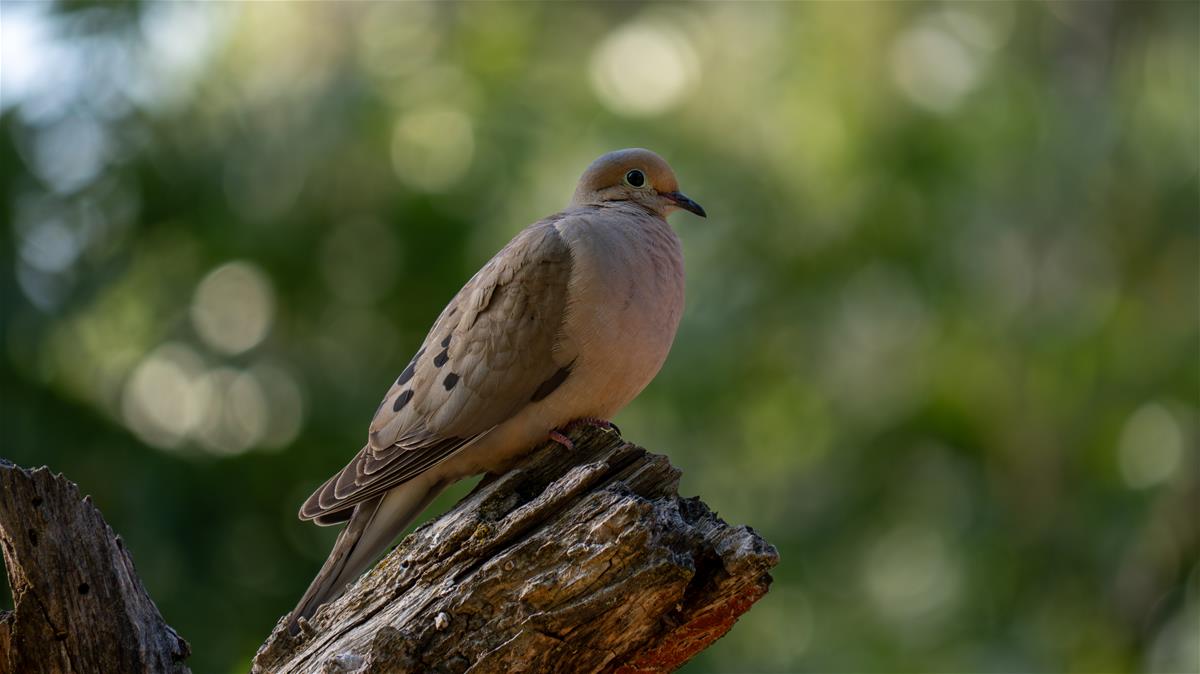
The Mourning Dove is a slender, medium-sized dove recognizable by its small head, soft grey-brown plumage, black spots on the wings and long, pointed tail edged with white. Adults are approximately 23 to 34 centimetres long, weigh about 86 to 170 grams and have a wingspan of around 45 centimetres. Males tend to be slightly larger and more colourful than females, often showing a bluish-grey crown and subtle rosy colouring on the breast.
Its name comes from its familiar, low, mournful-sounding coo, but another characteristic sound is produced by its wings. When a Mourning Dove takes flight, specialized wing feathers create a sharp whistling sound. This serves as an alarm: the whistle of a startled bird taking off can warn nearby doves of danger. Mourning Doves are powerful fliers despite their delicate appearance and can make rapid turns and changes in direction when escaping predators.
Like other pigeons and doves, Mourning Doves can drink in an unusual way. Instead of repeatedly taking a mouthful and tipping the head back, they can immerse the bill and draw water continuously. They also store large quantities of seeds in an expanded portion of the oesophagus called the crop before retreating to a safer location to digest their meal.
LENGTH
Approximately 23–34 centimetres.
WINGSPAN
Approximately 45 centimetres.
WEIGHT
Approximately 86–170 grams, with males generally somewhat heavier than females.
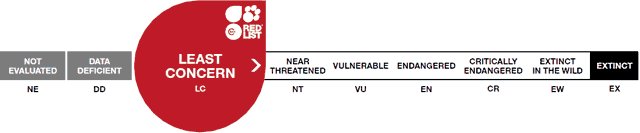
Conservation Status: IUCN
Distribution
Mourning Doves occur across most of North America. Populations in warmer regions may remain in the same area throughout the year, while many birds breeding in Canada and the northern United States migrate south for winter. Some northern birds travel thousands of kilometres, reaching Mexico and farther south.
Habitat
This adaptable species favours open and semi-open environments rather than dense forest. It occurs in grasslands, agricultural fields, open woodlands, forest edges, deserts, roadsides, parks and suburban neighbourhoods. Trees, shrubs, utility lines and other elevated structures provide convenient resting and calling perches, while most feeding occurs on open ground.
Diet
Mourning Doves are primarily seed eaters, with seeds making up approximately 99% of their diet. They consume the seeds of wild grasses, weeds and herbs as well as cultivated grains. Rather than scratching through leaf litter like chickens or many sparrows, they generally pick exposed seeds directly from the ground. They may occasionally eat berries or small invertebrates such as snails.
Reproduction
Mourning Doves are prolific breeders and may raise several broods during a single breeding season. A typical clutch contains just two white eggs, which are incubated for approximately 14 days. Both parents participate in raising the young. Their nests are famously simple platforms of twigs and grasses, usually built in trees or shrubs but sometimes placed on buildings or even directly on the ground.
For the first days after hatching, both parents produce a nutrient-rich substance called crop milk from the lining of their crops and feed it to their chicks. This remarkable form of parental care is characteristic of pigeons and doves. Nestlings develop rapidly and generally leave the nest only 12 to 15 days after hatching.
Adaptations
The Mourning Dove combines excellent camouflage with remarkable flight ability. Its muted brown and grey plumage blends into dry vegetation and open ground, while its long, pointed wings support fast, direct flight when danger appears. The distinctive wing whistle provides an additional warning mechanism for nearby birds. Its enlarged crop allows it to gather seeds quickly in exposed areas and digest them later from a safer perch, while the ability to drink continuously without repeatedly raising its head allows it to take in water efficiently.
Threats to Survival
The Mourning Dove remains abundant, but individuals face predation, collisions with vehicles and windows, and exposure to domestic cats. Hunting is widespread in portions of its range but is regulated and monitored. Lead poisoning can also be a concern where birds accidentally swallow spent lead shot while gathering seeds and grit from the ground. Habitat change has benefited the species in many areas by creating open landscapes, although changing agricultural practices and other environmental pressures may contribute to population declines.