Viewable
Actinopterygii
Location at the Zoo
Americas
Global Range
Americas
Mexican blind cavefish (Mexican tetra)
Astyanax mexicanus
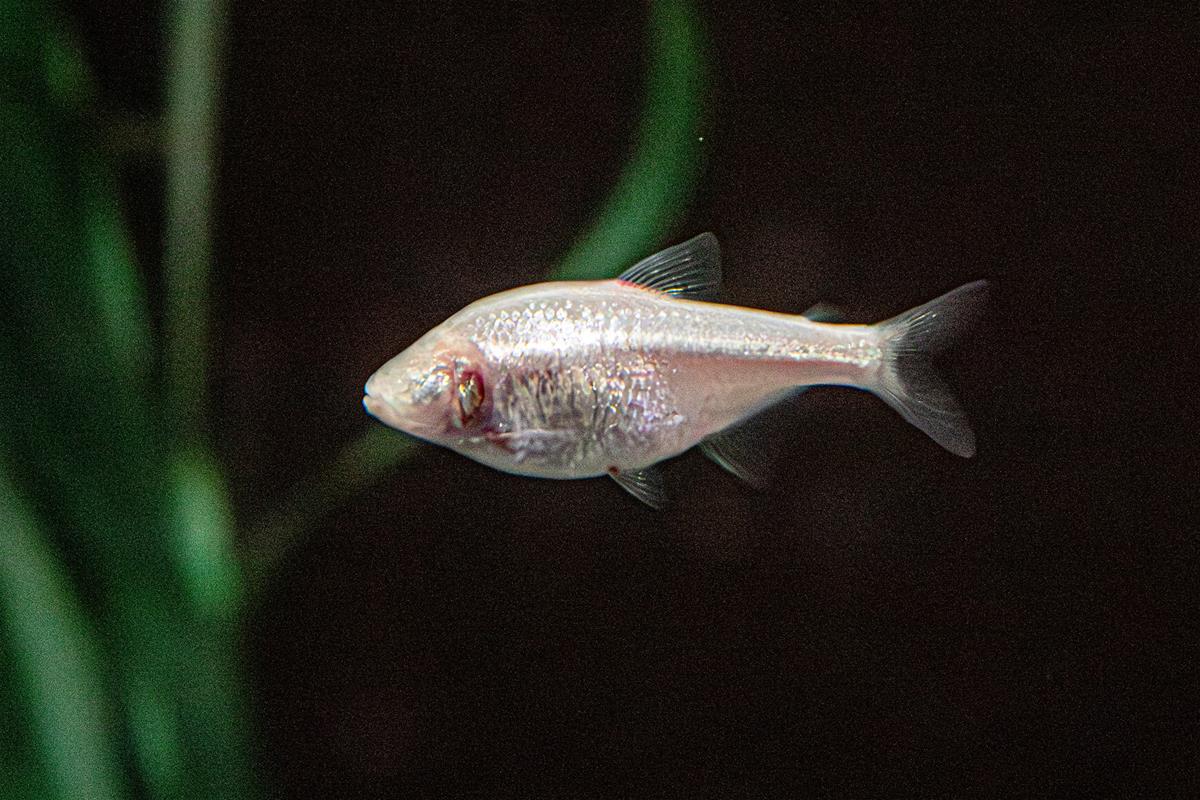
The Mexican Blind Cavefish is a small freshwater fish best known for its cave-dwelling form, which lacks functional eyes and pigmentation. Adults typically measure 7 to 12 centimetres in length. Cave forms are pale pink or white, with translucent skin through which internal organs may be visible. Surface-dwelling forms of the same species retain normal eyes and silver-grey coloration.
Both forms belong to the same species, but they inhabit very different environments. Cave populations live in complete darkness and have evolved unique traits such as enhanced sensory systems, increased fat storage, and altered behaviour. Because of this, Astyanax mexicanus is one of the most important species in the world for studying evolution, adaptation, and developmental biology. In zoo and aquarium settings, it is often used to illustrate how extreme environments can shape physical traits over time.
HEAD AND BODY LENGTH
Typically 7–12 centimetres.
WEIGHT
Generally only a few grams; precise weight varies by age and condition.
Conservation Status: IUCN
Distribution
Surface forms occur in rivers and streams across northeastern Mexico and parts of southern Texas. Cave-dwelling populations are restricted to isolated cave systems, particularly in the Sierra de El Abra region of Mexico.
Habitat
Surface forms inhabit freshwater rivers, streams, and pools. Cave forms live in subterranean caves and sinkholes, often in complete darkness with limited food availability. Cave environments are typically stable in temperature but nutrient-poor, placing strong selective pressure on inhabitants.
Diet
Omnivorous. Feeds on insects, small crustaceans, algae, plant matter, and organic debris. Cave-dwelling individuals rely on food washed into caves from the surface, such as insects or detritus, and have adapted to survive long periods without feeding.
Reproduction
Breeding occurs year-round in suitable conditions. Females scatter eggs in open water, and there is no parental care. Both surface and cave forms can interbreed, producing fertile offspring, demonstrating that they are the same species despite their physical differences.
Adaptations
Cave-dwelling forms have lost functional eyes and pigmentation over many generations, conserving energy in an environment where vision is useless. In contrast, they have developed highly sensitive lateral line systems, enhanced taste and smell, and behavioural traits such as constant foraging. Increased fat storage and altered sleep patterns also help them survive in food-limited cave environments. These adaptations make the species a powerful example of evolution in action.
Threats to Survival
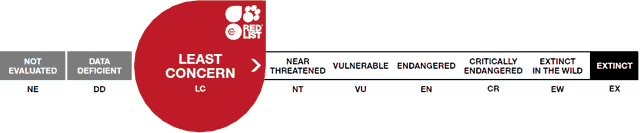
Local threats include groundwater contamination, cave tourism, habitat destruction, and reduced water flow due to human water use. While the species is not globally threatened, individual cave populations can be easily lost due to their isolation and specialized habitat requirements.