Viewable
Actinopterygii
Location at the Zoo
Australasia
Global Range
Africa
Malagasy Rainbowfish
Bedotia geayi
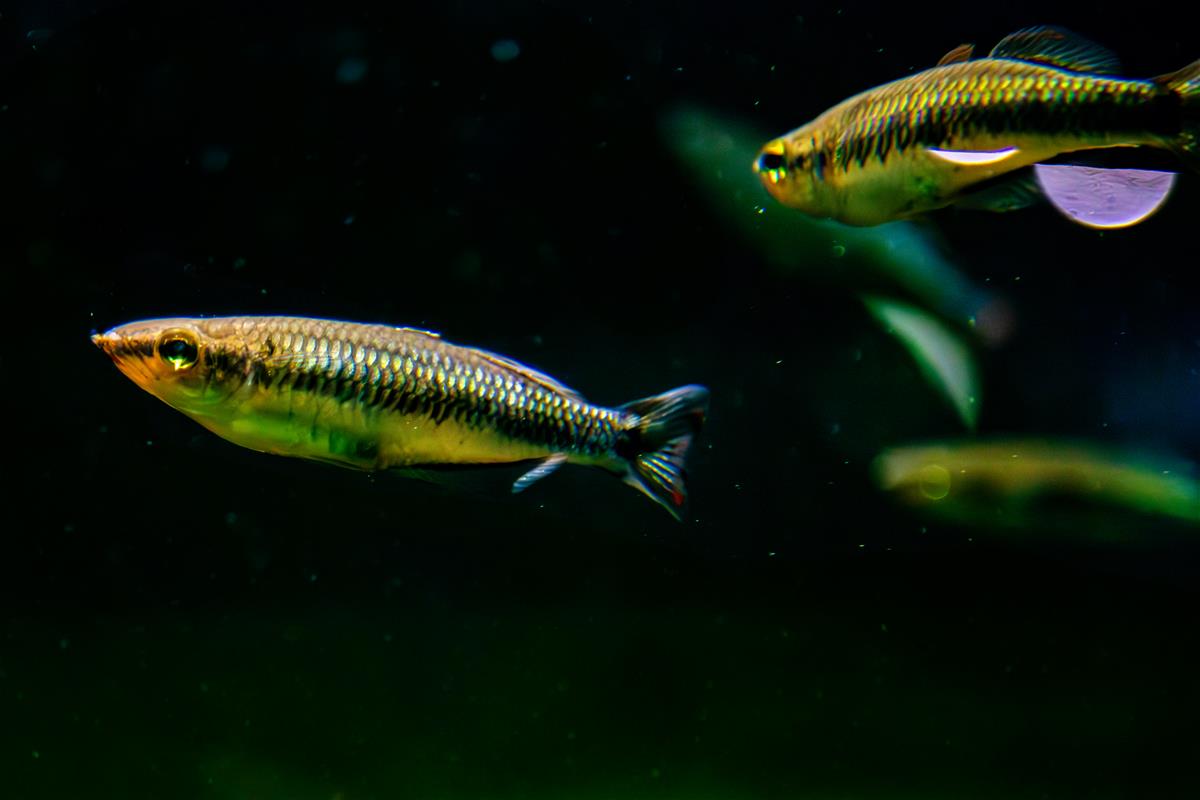
The Malagasy Rainbowfish is a small, slender freshwater fish known for its subtle iridescent sheen, which can flash blue, green, or gold depending on light and movement. Adults typically reach 8 to 12 centimetres in length. The body is streamlined and silvery with translucent fins, and males often show more intense colouration during breeding periods.
This species is active and schooling, moving constantly through the water column. While its colours are more understated than those of some rainbowfish from Australia or New Guinea, they are best appreciated when the fish is viewed in groups and under natural lighting. In zoological and aquarium settings, the Malagasy Rainbowfish is often used to represent Madagascar’s unique freshwater biodiversity, which is far less well known than the island’s terrestrial wildlife.
HEAD AND BODY LENGTH
Usually 8–12 centimetres.
WEIGHT
Very light-bodied; typically only a few grams.
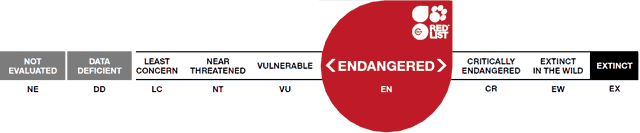
Conservation Status: IUCN
Distribution
Restricted to eastern Madagascar, primarily in short, coastal river systems flowing from forested highlands to the Indian Ocean.
Habitat
Inhabits clear, slow- to moderately flowing streams and rivers, often with sandy or rocky substrates and aquatic vegetation. It prefers well-oxygenated water and is commonly found in shaded areas where forest cover helps stabilize water temperature and quality.
Diet
Omnivorous. Feeds on small insects, aquatic invertebrates, algae, and organic matter. In the wild, it captures drifting prey in the water column and grazes lightly on biofilm and plant material.
Reproduction
Breeding occurs during warmer periods when food is abundant. Eggs are scattered among fine-leaved aquatic plants or submerged vegetation. There is no parental care after spawning. Juveniles grow rapidly under favourable conditions but are sensitive to changes in water quality.
Adaptations
A streamlined body and forked tail allow efficient swimming in flowing water. Schooling behaviour improves predator detection and feeding efficiency. Subtle iridescence may play a role in social signalling, particularly during breeding. Sensitivity to water quality reflects adaptation to relatively stable, forested freshwater systems.
Threats to Survival
Major threats include deforestation, increased sedimentation, water pollution, damming, and competition from introduced fish species. Climate change may further affect rainfall patterns and stream flow. Because populations are isolated by river systems, recolonization after local extinctions is unlikely.