Viewable
Actinopterygii
Location at the Zoo
African Rainforest
Global Range
Africa
Leopard Ctenopoma
Ctenopoma acutirostre
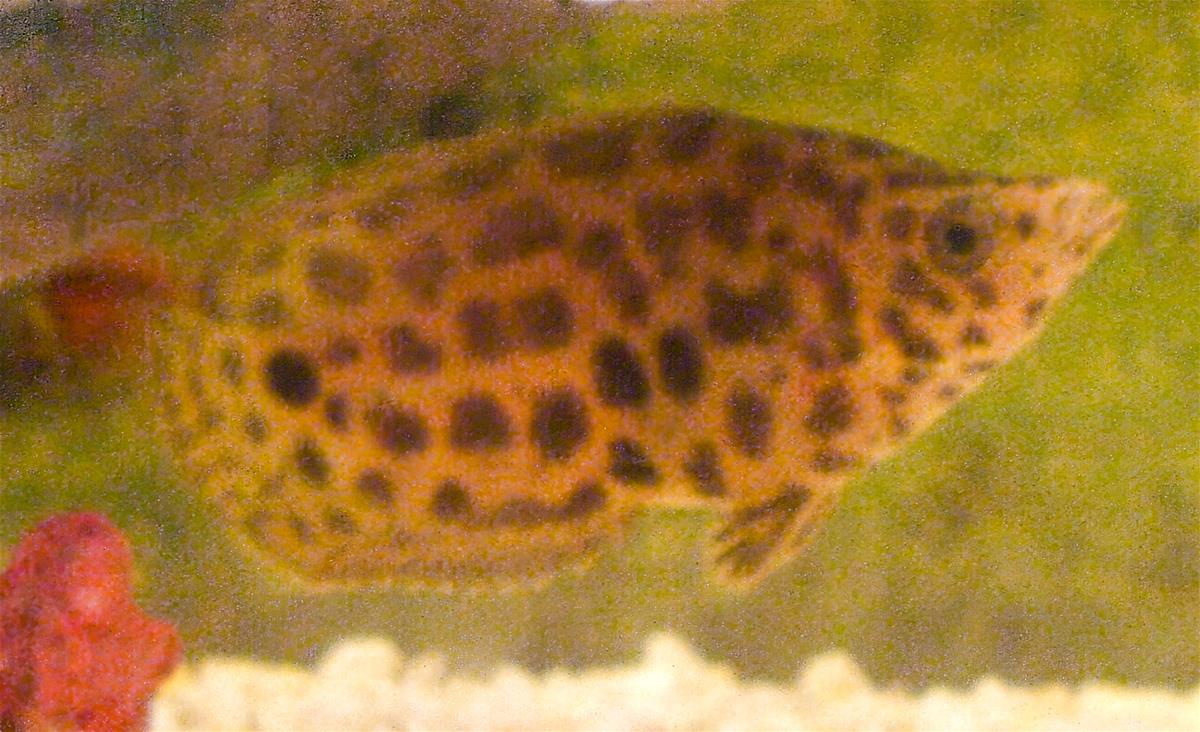
The Leopard Ctenopoma, also known as the Leopard bush fish, is a medium-sized freshwater fish known for its bold, irregular dark spots scattered across a pale brown or golden body, giving it a leopard-like appearance. Adults typically reach 15 to 20 centimetres in length. The body is laterally compressed with a pointed snout, large eyes, and long dorsal and anal fins that contribute to its slow, deliberate swimming style.
This species has a calm, almost hovering presence in the water and is often mistaken for being inactive. In reality, it is an ambush predator that relies on patience and camouflage rather than speed. In aquarium and zoo displays, the Leopard Ctenopoma is frequently highlighted for its unusual patterning and its ability to breathe air, an adaptation that allows it to survive in low-oxygen environments.
HEAD AND BODY LENGTH
Typically 15–20 centimetres.
WEIGHT
Generally a few hundred grams; weight varies depending on age and condition.
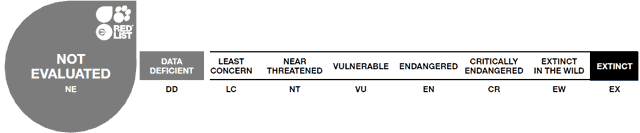
Conservation Status: IUCN
Distribution
Occurs throughout the Congo River Basin, one of the most biodiverse freshwater systems in the world.
Habitat
Inhabits slow-moving rivers, floodplains, swamps, and forest streams, often in areas with dense vegetation and submerged roots. It prefers warm, calm waters where dissolved oxygen levels may be low.
Diet
Carnivorous. Feeds on small fish, insects, crustaceans, and other aquatic invertebrates. Its hunting strategy involves remaining motionless among plants until prey comes within striking distance.
Reproduction
Breeding biology in the wild is not well documented. In captivity, spawning occurs in warm, vegetated water. Eggs are released among floating plants, and there is no parental care. Larvae develop in shallow, sheltered areas.
Adaptations
The Leopard Ctenopoma possesses a labyrinth organ, allowing it to breathe atmospheric oxygen. This adaptation enables survival in stagnant or oxygen-poor waters where other fish may struggle. Its spotted colouration provides camouflage among vegetation and dappled light, while its slow, controlled movements reduce detection by both prey and predators.
Threats to Survival
Potential threats include water pollution, deforestation affecting river systems, and localized habitat modification. However, the species is not currently known to be under significant threat across its range.