Viewable
Location at the Zoo
Indo-Malaya
Global Range
Southeast Asia
Hamilton’s Pond Turtle
Geoclemys hamiltonii
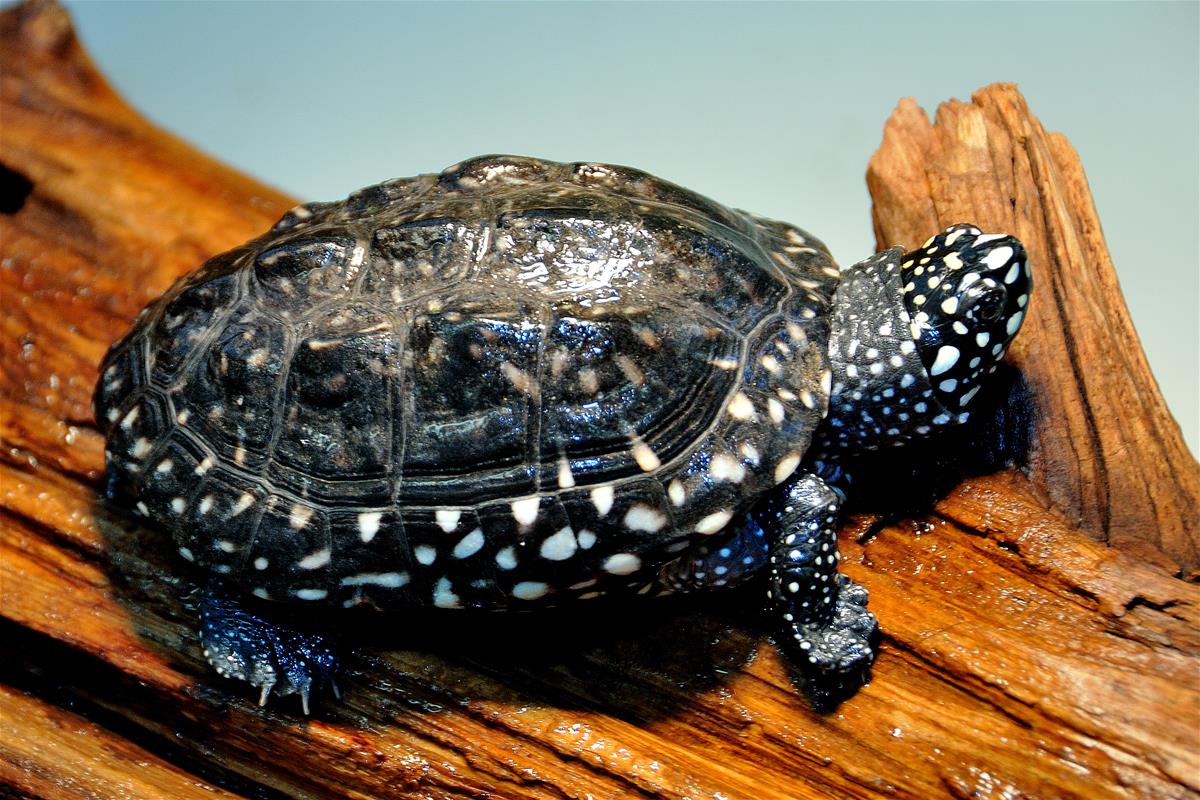
Hamilton’s Pond Turtle is a large, striking freshwater turtle best known for its dark shell marked with bold yellow spots and radiating lines. Adults typically reach 35 to 40 centimetres in shell length, making it one of the larger freshwater turtles of South Asia. The carapace is high-domed and strongly sculpted, while the head and limbs are patterned with yellow striping against a dark background.
This species has a heavy, robust appearance and moves deliberately both in water and on land. It is primarily aquatic but frequently basks along riverbanks and pond edges. Its bold patterning makes it visually distinctive, and in zoological settings it is often used to highlight the diversity and conservation challenges of Asian freshwater turtles.
HEAD AND BODY LENGTH
Shell length generally ranges from 35–40 centimetres.
WEIGHT
Large adults may weigh 8 to 12 kilograms, depending on age and sex.
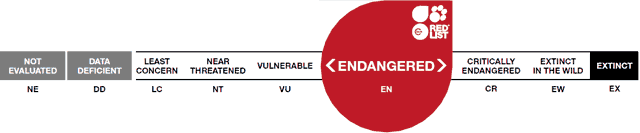
Conservation Status: IUCN
Distribution
Occurs in river systems, floodplains, and wetlands of northern India, Pakistan, Bangladesh, and southern Nepal, particularly within the Indus and Ganges river basins.
Habitat
Inhabits slow-moving rivers, oxbow lakes, marshes, ponds, and floodplain wetlands. It prefers freshwater habitats with soft substrates and abundant vegetation. During dry periods, individuals may move between water bodies or remain in deeper pools.
Diet
Omnivorous. Feeds on aquatic plants, fruits, snails, insects, crustaceans, fish, carrion, and other organic matter. Juveniles tend to consume more animal prey, while adults include a greater proportion of plant material in their diet.
Reproduction
Breeding typically occurs during the dry season. Females lay 20 to 30 eggs in nests dug into sandy or soft soil near water. Incubation lasts several months, and hatchlings usually emerge with the onset of rains. Like many turtles, sex determination is influenced by incubation temperature.
Adaptations
The turtle’s heavily domed shell provides strong protection against predators. Bold yellow markings may help break up the outline of the shell in dappled light or play a role in species recognition. Strong limbs and webbed feet allow efficient swimming, while the ability to bask helps regulate body temperature and support shell health.
Threats to Survival
Major threats include habitat destruction, wetland drainage, river pollution, entanglement in fishing gear, and collection for food and illegal trade. Eggs and hatchlings are vulnerable to predation, and adult mortality has a significant impact due to the species’ slow life history. Climate change may further affect nesting success and wetland availability.