Viewable
Location at the Zoo
Australasia
Global Range
Australia
Galah
Eolophus roseicapilla
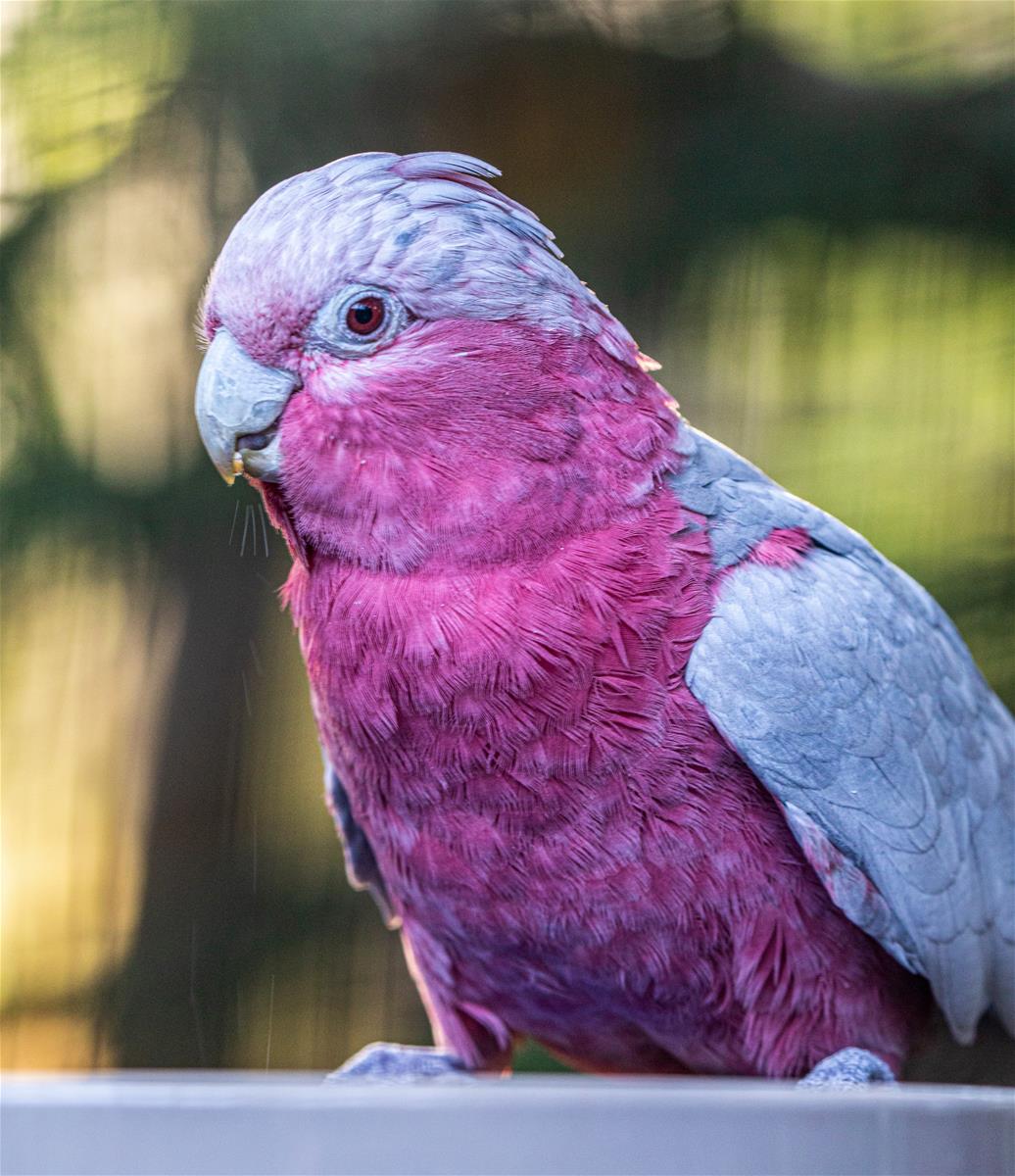
The Galah is one of Australia’s most familiar and charismatic parrots, easily recognized by its soft pink chest and face, pale grey wings, and white crest. Adults typically measure 34 to 38 centimetres in length and weigh between 270 and 350 grams. Males and females appear similar, though females usually have reddish eyes while males have dark brown eyes.
Highly social and intelligent, Galahs are often seen in large, noisy flocks, either feeding on the ground or flying together with strong, graceful wingbeats. They are known for playful behaviour, aerial acrobatics, and loud vocalizations. In zoos and wildlife parks, Galahs are often used to illustrate parrot intelligence, social behaviour, and adaptation to human-altered environments.
HEAD AND BODY LENGTH
Approximately 34–38 centimetres.
WEIGHT
Generally between 270 and 350 grams.
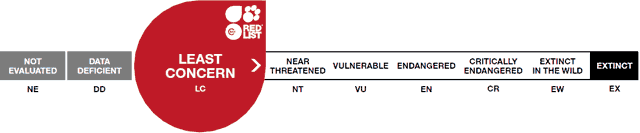
Conservation Status: IUCN
Distribution
Occurs across nearly all of mainland Australia, from coastal regions to inland areas, with the exception of dense tropical rainforests and extremely arid deserts.
Habitat
Inhabits open woodlands, grasslands, farmland, parks, and urban areas. It relies on tree hollows for nesting, often choosing large eucalypts near open feeding grounds. Access to water is important, and Galahs commonly gather near dams, troughs, and natural waterholes.
Diet
Feeds mainly on grass seeds, grains, roots, and shoots, as well as cultivated crops. Foraging usually occurs on the ground, often in large flocks. Its strong beak allows it to dig for roots and break apart tough seed heads.
Reproduction
Breeding typically occurs between July and December, though timing varies with rainfall. Nests are built in tree hollows, where the female lays 2 to 5 eggs. Incubation lasts about 25 to 30 days, and both parents share feeding duties. Chicks fledge after approximately eight weeks.
Adaptations
The Galah’s flexible diet and tolerance of human-modified landscapes have contributed to its success. Strong social bonds and flocking behaviour improve predator detection and foraging efficiency. Its powerful beak supports a wide range of feeding strategies, while excellent flight ability allows rapid movement between feeding and nesting sites.