Viewable
Actinopterygii
Location at the Zoo
Australasia
Global Range
Pacific Ocean
Flame Angelfish
Centropyge loricula
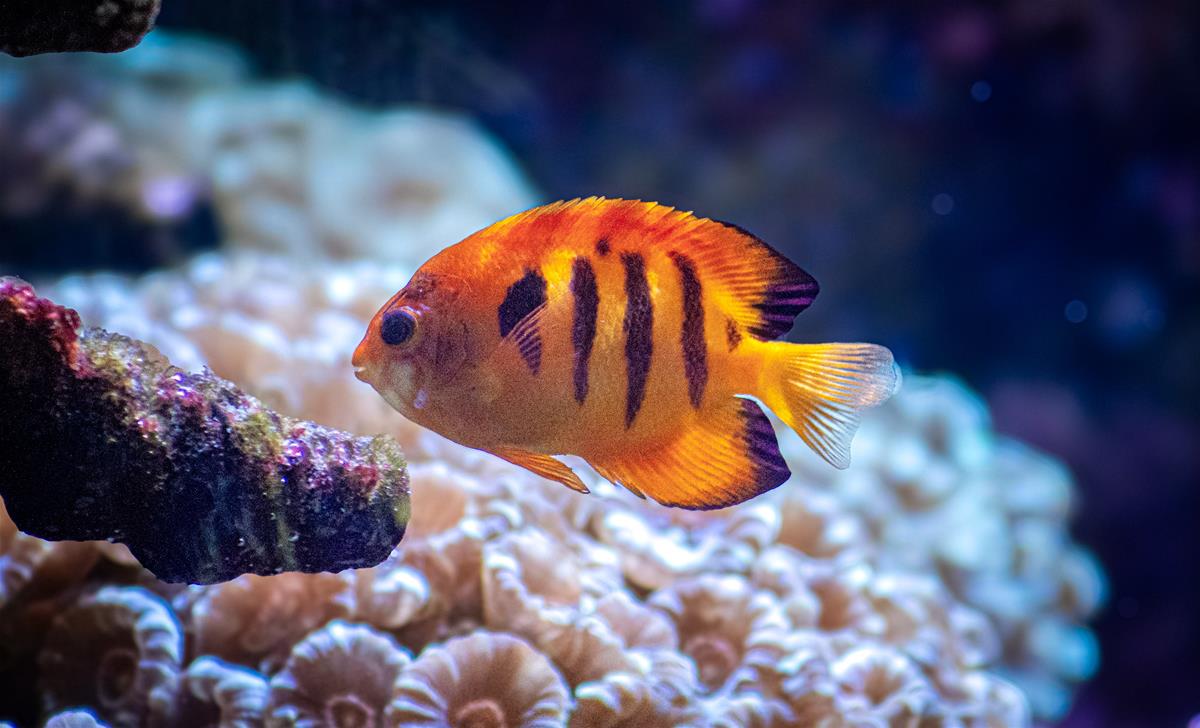
The Flame Angelfish is a small, brilliantly coloured reef fish known for its vivid orange-red body accented with vertical black bars and electric blue highlights along the fins. Adults typically reach 10 to 15 centimetres in length. Its compact, laterally compressed body allows it to move easily through coral crevices and reef structures.
Despite its small size, the Flame Angelfish is bold and active, often seen darting in and out of coral heads. Its intense colouration makes it one of the most recognizable reef fish and a standout in aquarium displays. Individuals may vary slightly in colour depending on their geographic origin, with some populations showing deeper reds or more pronounced striping.
HEAD AND BODY LENGTH
Typically 10–15 centimetres.
WEIGHT
Very light-bodied; generally only a few tens of grams.
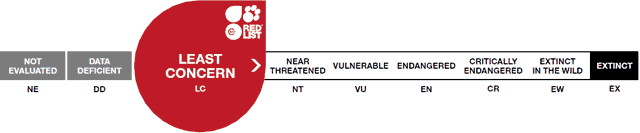
Conservation Status: IUCN
Distribution
Occurs throughout the central and western Pacific Ocean, including island reef systems and coastal coral habitats.
Habitat
Inhabits coral reefs, especially areas with complex structure such as branching corals and rocky outcrops. It is most often found at depths between 5 and 60 metres, where it can find both shelter and food.
Diet
Omnivorous. Feeds on algae, detritus, sponges, and small invertebrates. It spends much of its time grazing on reef surfaces and picking at food among coral and rock.
Reproduction
Flame Angelfish are broadcast spawners. During breeding, pairs release eggs and sperm into the water column, usually at dusk. Fertilized eggs drift with ocean currents before developing into larvae that eventually settle onto reefs.Adaptations
Its bright colouration may play a role in species recognition and communication among individuals. The flattened body shape allows it to navigate narrow reef spaces, while agile swimming helps it quickly escape predators. Like other angelfish, it is well adapted to picking food from complex reef surfaces.
Threats to Survival
Primary threats include coral reef loss, climate change, and localized pressure from the aquarium trade. Because the species depends on healthy reef systems, long-term declines in coral health could impact populations.