Viewable
Location at the Zoo
Indo-Malaya
Global Range
Asia
Edwards’s Pheasant
Lophura edwardsi
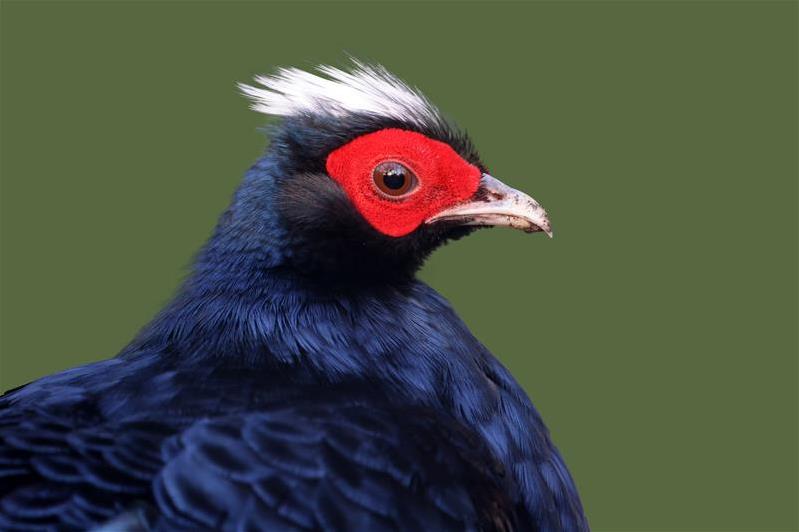
Edwards’s Pheasant is a medium-sized, ground-dwelling bird with a sleek, elegant appearance. Males are glossy dark blue-black with a subtle metallic sheen, a bright red facial skin, and white undertail coverts that are often visible when walking or displaying. Females are more subdued, with rich brown plumage patterned for camouflage. Adults typically measure 55 to 65 centimetres in length, with males slightly larger than females.
This species is naturally secretive and spends much of its time moving quietly through dense forest undergrowth. Its low visibility in the wild has contributed to uncertainty around its current status, making it one of the most enigmatic and conservation-significant pheasants in the world. In zoological settings, Edwards’s Pheasant is often highlighted as a flagship species for forest conservation and international breeding efforts.
HEAD AND BODY LENGTH
Approximately 55–65 centimetres.
WEIGHT
Adults generally weigh between 1.3 and 1.7 kilograms.
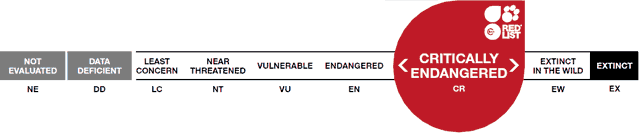
Conservation Status: IUCN
Distribution
Historically restricted to central Vietnam, particularly in lowland evergreen forests. Confirmed wild populations have not been reliably documented in recent decades.
Habitat
Originally inhabited dense lowland tropical forests with thick understory vegetation. The species relies on forest floor cover for foraging and nesting and avoids open or disturbed areas. Loss of continuous forest has been a critical factor in its decline.
Diet
Omnivorous. Feeds on seeds, fallen fruit, leaves, insects, worms, and other small invertebrates found while foraging on the forest floor. Its diet reflects the rich diversity of lowland forest ecosystems.
Reproduction
Breeding occurs seasonally. Females lay small clutches of 4 to 7 eggs in shallow ground nests concealed by vegetation. Incubation lasts around 22 to 24 days. Chicks are precocial, leaving the nest shortly after hatching and following the female while learning to forage.
Adaptations
Dark, glossy plumage in males may play a role in courtship and species recognition, while the female’s mottled brown colouring provides effective camouflage when nesting. Strong legs and feet support ground-based foraging and rapid movement through dense understory. The species’ quiet behaviour and preference for dense cover reduce detection by predators.
Threats to Survival
Primary threats include deforestation, habitat fragmentation, and historical hunting. Even if small wild populations persist, they are likely extremely vulnerable due to limited habitat, low numbers, and isolation. Climate change may further affect forest structure and suitability in remaining habitats.