Viewable
Location at the Zoo
Australasia
Global Range
Australasia
Eastern Rosella
Platycercus
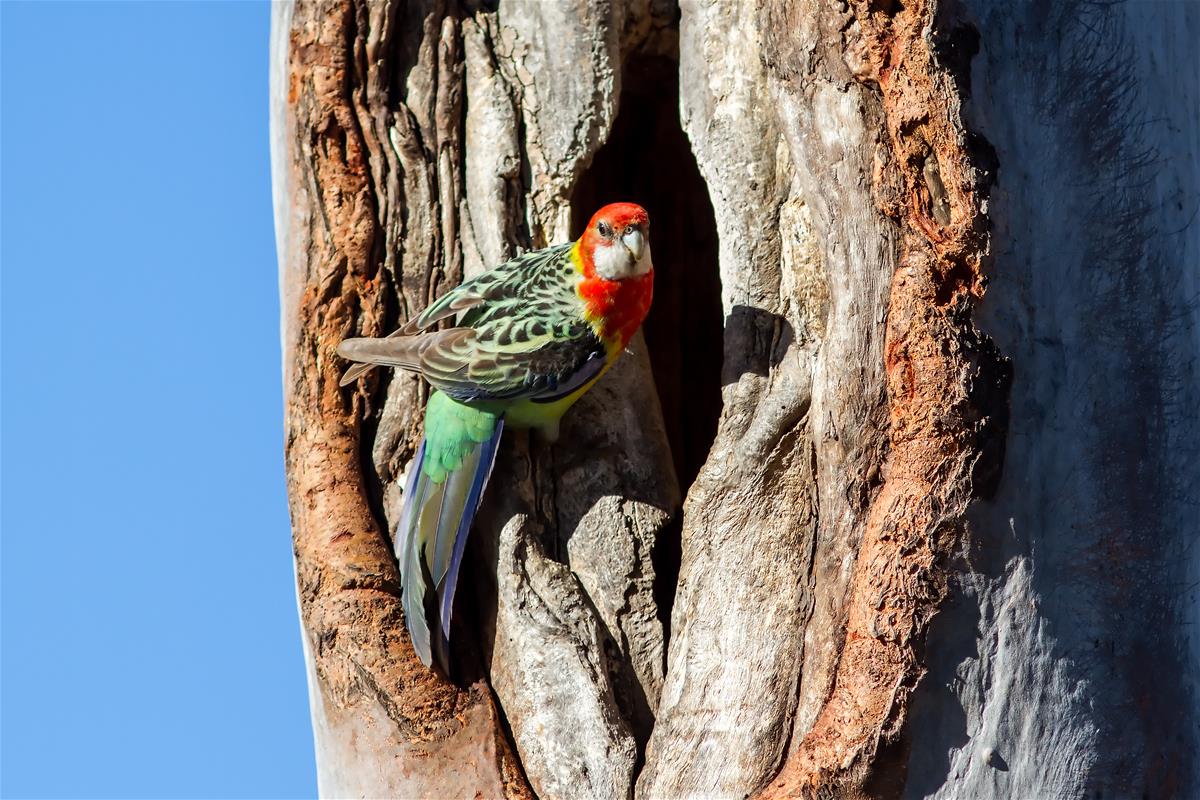
The Eastern Rosella is a brightly coloured parrot easily recognized by its red head, white cheek patches, and yellow-and-black scalloped back. The wings and tail are predominantly blue, creating a striking contrast with the body. Adults typically measure 30 centimetres in length and weigh around 100 to 120 grams. Males and females are similar in appearance, though males are often slightly larger with broader heads.
This species is often seen foraging on the ground in open grassy areas or flying between scattered trees with a swift, undulating flight. Its clear whistling calls and vivid plumage make it a familiar and popular bird across much of its range. In zoological and educational settings, the Eastern Rosella is valued for illustrating the diversity of Australia’s parrot species.
HEAD AND BODY LENGTH
Approximately 28–32 centimetres.
WEIGHT
Generally between 100 and 120 grams.
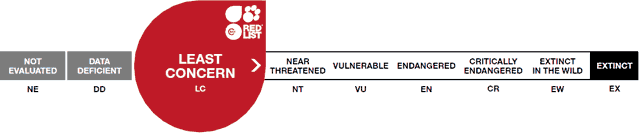
Conservation Status: IUCN
Distribution
Occurs widely across eastern Australia and has been introduced to Tasmania and New Zealand, where it has established breeding populations. Its native range overlaps with other rosella species, though ecological differences help reduce competition.
Habitat
Prefers open woodlands, grasslands with scattered trees, forest edges, and agricultural areas. It relies on tree hollows for nesting and roosting and often forages on the ground in nearby open spaces.
Diet
Feeds on grass seeds, fruits, berries, blossoms, and occasionally insects and larvae. Ground foraging is common, particularly in grassy areas where seeds are abundant. Its strong beak allows it to process a wide variety of plant materials.
Reproduction
Breeding generally occurs from September to January. Nests are built in tree hollows, where females lay 4 to 8 eggs. Incubation lasts approximately 19 to 21 days, and chicks remain in the nest for about five weeks. Both parents participate in feeding the young.
Adaptations
The Eastern Rosella’s vivid colouration supports species recognition and social communication. Strong flight muscles allow efficient travel between feeding and nesting sites. Its flexible diet and ability to use human-modified habitats have contributed to its success across a wide geographic range.
Threats to Survival
The main threats include loss of nesting hollows due to land clearing and competition with other hollow-nesting birds. In introduced regions, it may compete with native species, but within its native range it remains abundant and resilient.