Viewable
Location at the Zoo
Australasia
Global Range
Australasia
Crested pigeon
Ocyphaps lophotes
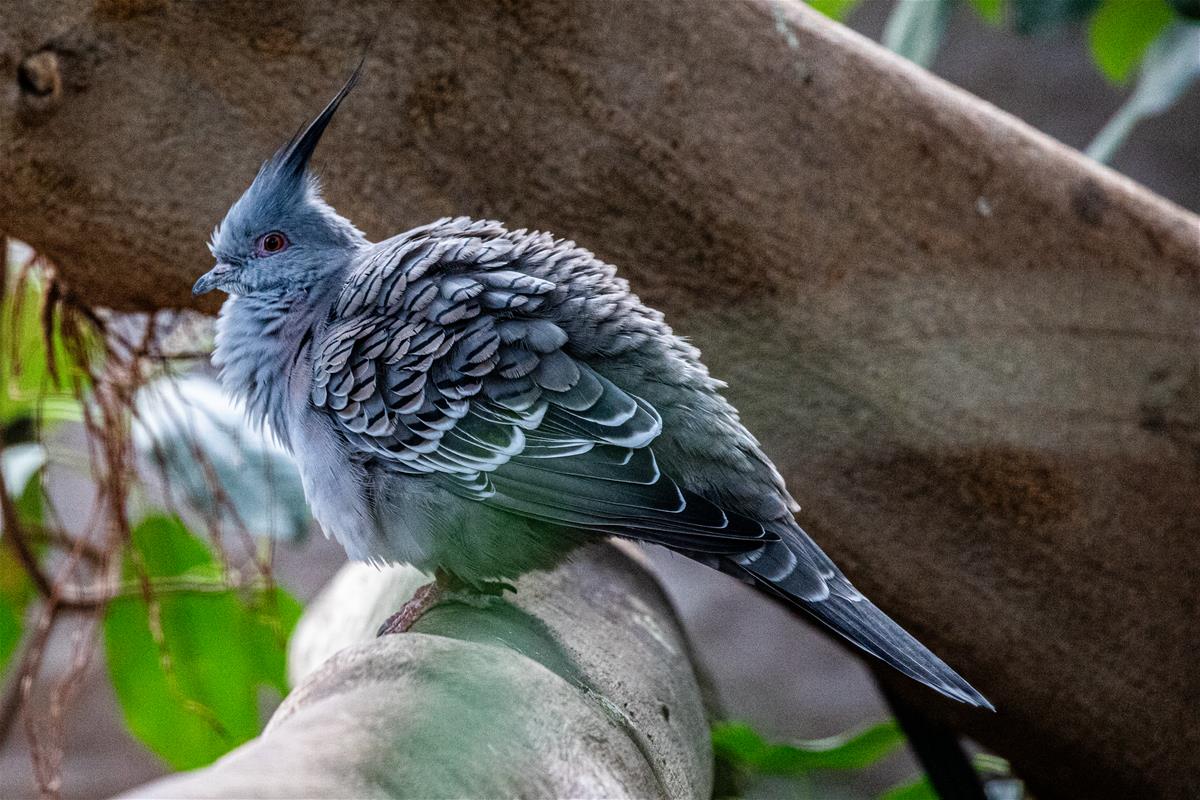
The Crested Pigeon is a distinctive medium-sized pigeon recognized by the upright, spike-like crest on the top of its head. Adults typically measure 30 to 34 centimetres in length and weigh between 180 and 230 grams. Plumage is predominantly soft grey with a subtle pinkish tone on the chest, while the wings display bold black markings and a shimmering patch that can flash green or purple in sunlight.
When startled into flight, this species produces a characteristic whistling sound created by air passing through modified wing feathers. This sound serves as an alarm signal to other pigeons nearby. Crested Pigeons are often seen walking calmly on the ground or perching on fences and trees, making them a familiar sight in many parts of Australia.
HEAD AND BODY LENGTH
Approximately 30–34 centimetres.
WEIGHT
Generally between 180 and 230 grams.
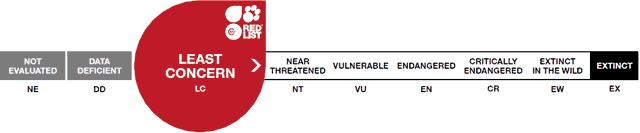
Conservation Status: IUCN
Distribution
Occurs throughout mainland Australia, particularly in open habitats. It has expanded into areas of eastern and southeastern Australia where it was historically uncommon.
Habitat
Prefers open woodlands, grasslands, farmland, and lightly wooded areas. It avoids dense forests but readily uses urban parks, roadsides, and agricultural landscapes, provided there is access to open ground and water.
Diet
Feeds primarily on grass seeds and grains, foraging mostly on the ground. It may also consume fallen fruit and small plant material. Feeding often occurs in pairs or small flocks, especially near water sources.
Reproduction
Breeding can occur throughout much of the year when conditions are favourable. Nests are simple platforms of twigs placed in shrubs or trees. Females usually lay two eggs, which are incubated by both parents. Chicks grow quickly and fledge after about two weeks.
Adaptations
The upright crest may function in visual communication, helping individuals recognize one another. The wing-produced whistling alarm call is a key anti-predator adaptation, warning others of sudden danger. Long legs and strong feet support efficient ground foraging, while strong flight muscles allow rapid escape when threatened.
Threats to Survival
Local threats include road mortality, predation by introduced animals, and habitat alteration. However, these pressures have not resulted in population declines at a species level due to the pigeon’s adaptability and ability to exploit human-modified environments.