Viewable
Actinopterygii
Location at the Zoo
Australasia
Global Range
Indo-Pacific
Blue-girdled angelfish
Pomacanthus navarchus
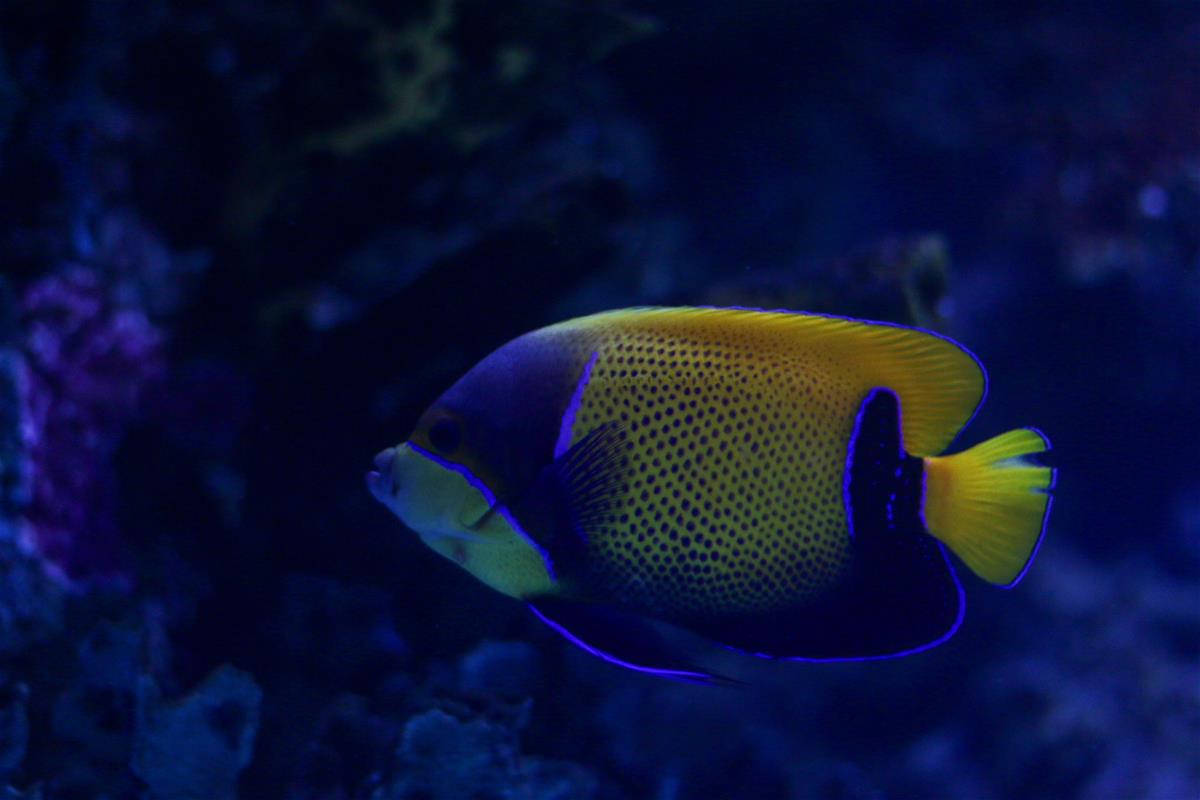
The Blue-girdled Angelfish is a striking reef fish known for its bold contrast of deep blue, bright yellow, and black markings. Adults typically reach 25 to 30 centimetres in length. The body is predominantly dark blue with a bright yellow band or “girdle” sweeping across the midsection, along with a yellow tail and vibrant blue face markings.
Juveniles look entirely different from adults, displaying dark bodies with curved blue and white stripes. This dramatic change in appearance as they mature helps reduce competition between age groups and may provide some protection from predators. The species’ vivid colouration and graceful swimming make it a standout in reef exhibits and a favourite among visitors.
HEAD AND BODY LENGTH
Typically 25–30 centimetres.
WEIGHT
Generally a few hundred grams to around 1 kilogram in large adults.
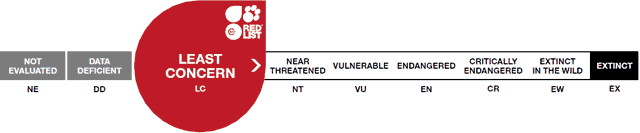
Conservation Status: IUCN
Distribution
Occurs widely across the Indo-Pacific region, particularly in coral-rich areas of Southeast Asia and northern Australia.
Habitat
Inhabits coral reefs, especially lagoon reefs and outer reef slopes. It prefers areas with abundant coral growth and crevices where it can shelter. Juveniles are often found in more protected reef zones, while adults occupy larger territories.
Diet
Omnivorous, feeding primarily on sponges, tunicates, algae, and small invertebrates. Its diet is closely tied to reef health, as many of its preferred food sources depend on living coral ecosystems.
Reproduction
This species is a broadcast spawner. During breeding, pairs release eggs and sperm into the water column, where fertilization occurs externally. The larvae drift with ocean currents before settling onto reefs and developing into juveniles.
Adaptations
The Blue-girdled Angelfish shows strong adaptation to reef life, with a laterally compressed body that allows it to navigate tight coral spaces. Its changing colouration between juvenile and adult stages reduces competition and may provide camouflage or mimicry benefits. Its specialized diet, particularly sponge feeding, reflects a close ecological relationship with coral reef environments.
Threats to Survival
Primary threats include coral reef loss, climate change, and localized collection for the aquarium trade. Declines in coral health can reduce available food and shelter, affecting long-term population stability.